Departments
 Departments

New to Slowsip? Create Account
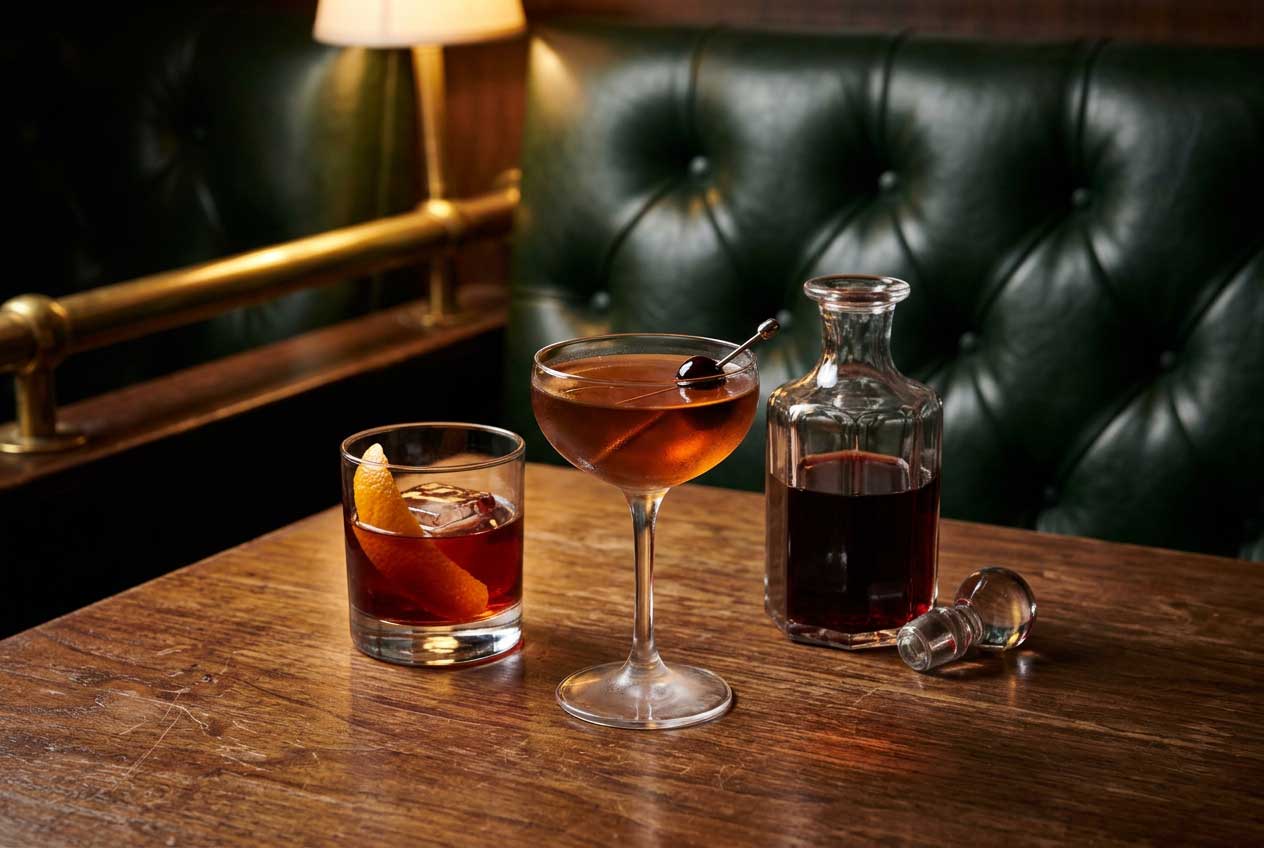
The popular version has it created at the Manhattan Club in December 1874 for a banquet said to have been hosted by Jennie Jerome, Winston Churchill's mother. The dates do not work: Jerome gave birth to Winston in England on 30 November, and she was at his christening at Blenheim on 27 December, two days before the dinner. The account historians find more credible comes from William Mulhall, a bartender at the Hoffman House, who credited a man named Black, whose bar stood on Broadway, ten doors below Houston Street, in the 1860s.
What is not in doubt is the print record, and it makes the point of this piece. The drink turns up in a newspaper column in 1882, and O.H. Byron's Modern Bartenders' Guide of 1884 prints two versions, one with Italian vermouth and one with French. So from the first printed recipes, which vermouth to use was part of the question.
It is still the right question. A Manhattan is two parts whiskey to one of vermouth with a few dashes of bitters, which makes vermouth a third of the liquid and, apart from the bitters, the only other flavour in the glass. In a Negroni or a Boulevardier, Campari talks over the vermouth. Here nothing does. A flat or tired vermouth will make a flat or tired Manhattan, whatever the bourbon.
Vermouth is wine, not spirit: an aromatised wine, at least three-quarters grape wine, fortified to somewhere between 14.5 and 22 per cent, and flavoured with botanicals of which wormwood is the defining one. Its name is the French pronunciation of the German Wermut, wormwood. Antonio Benedetto Carpano is credited with the first commercial sweet vermouth, in Turin in 1786, and the city's style is now protected: Vermouth di Torino, confirmed as a protected designation in 2017, must be made and bottled in Piedmont from Italian wine.
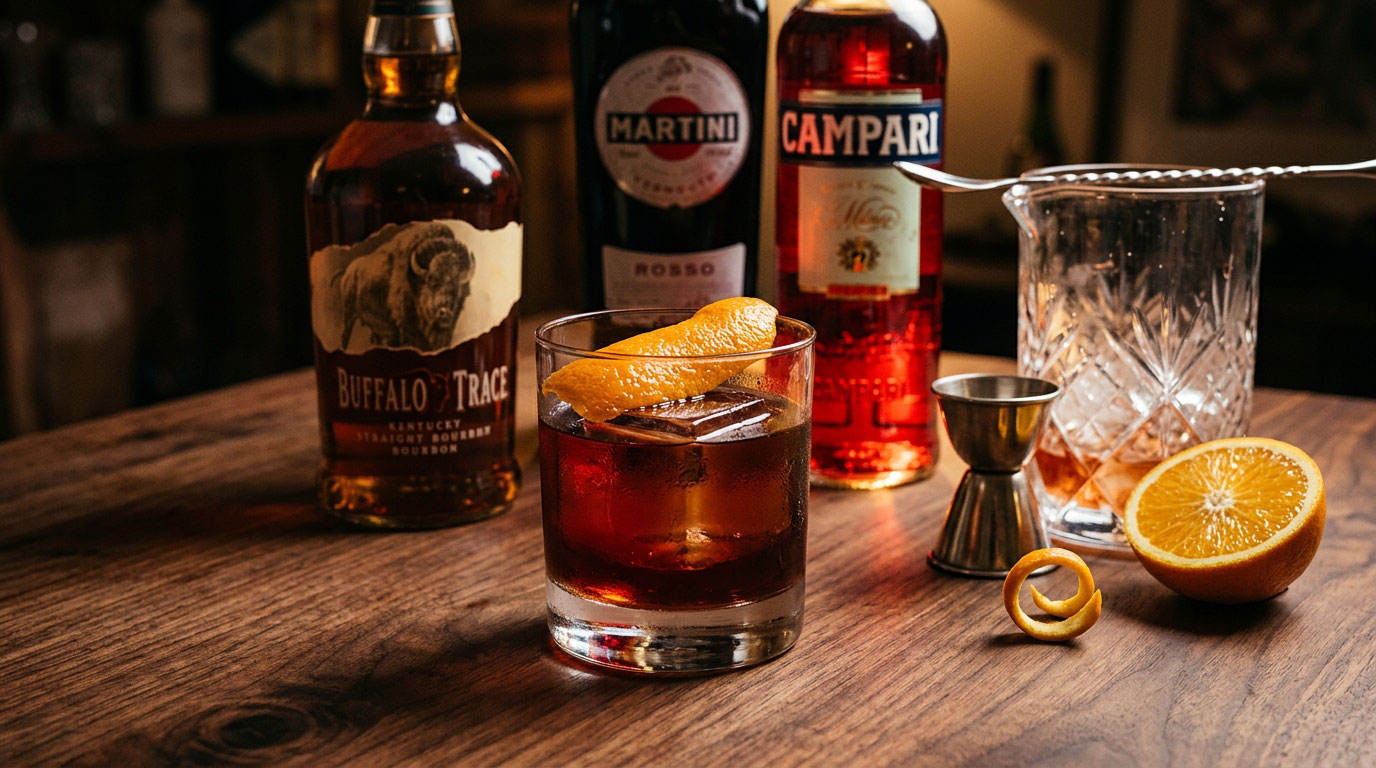
Because it is wine, it fades like wine. Opened and refrigerated, sweet vermouth is generally best within about four to eight weeks, and dry sooner. So the test of any vermouth is to taste it on its own, over ice, before it goes near the whiskey. If it tastes tired or sharp by itself, it will taste that way in the glass. The Martini Rosso below is a sweet red vermouth from one of the great Piedmont houses, whose recipe the brand dates to the 1860s and describes as artemisia, summer savory and dittany balanced with bittersweet woods. Bartenders often reach for richer Turin vermouths, such as Carpano Antica Formula, when they want more weight. Our view is that the next pound spent on a Manhattan is better spent on the vermouth than on the bourbon.
Put the coupe in the freezer for ten minutes, or fill it with ice water while you stir.
Fill a mixing glass two-thirds full with ice. Add the bourbon, the vermouth and the bitters.
Stir for about 30 seconds, until the outside of the glass is cold and the drink looks silky. A drink with no juice or egg in it is stirred, not shaken: shaking clouds it and adds air.
Strain into the chilled coupe and leave the ice behind.
Garnish with the cherry on a pick, or twist the orange peel over the surface so the oils land on the drink, then drop it in or rest it on the rim.
Serve at once. Then make a second with a different vermouth, change nothing else, and compare.