Departments
 Departments
Departments
Departments

New to Slowsip? Create Account
There is a moment, when the ferry from Scrabster clears the last of the Caithness coast and Orkney begins to materialise through the haar, that the world reorganises itself slightly. The sky widens. The land flattens. And something about the proportion of wind to silence makes it clear you have arrived somewhere that operates on its own terms. This is not Highland Park's invented mythology. This is simply Orkney.
Which is perhaps the most important thing to understand about what the distillery has achieved over the past two centuries — and, more pointedly, over the last decade or so of its brand evolution. When Highland Park leans into Viking heritage, peat smoke from heathered moorland, and the drama of Scotland's most northerly distillery, it is not confecting an identity from nothing. It is curating what is genuinely, stubbornly there.
That distinction matters enormously in a spirits category crowded with manufactured mystique. The difference between a brand that tells stories and one that has stories worth telling is usually visible from a considerable distance.
The difference between a brand that tells stories and one that has stories worth telling is usually visible from a considerable distance.

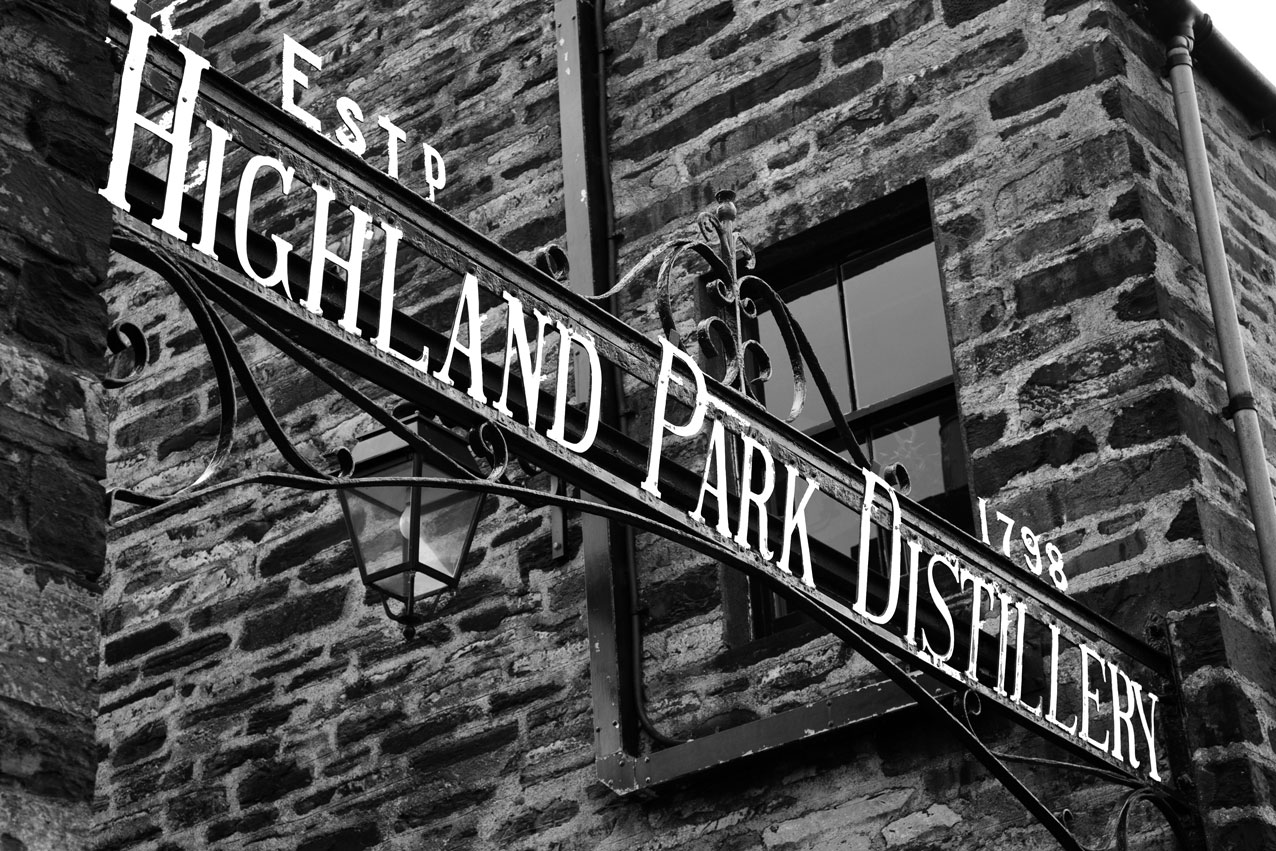
Every cult distillery needs its founding figure — and Highland Park has Magnus Eunson. Church beadle. Lay preacher. Notorious bootlegger. The legend holds that Eunson mashed his first illicit grain somewhere on the high park land above Kirkwall in the closing years of the eighteenth century, hiding his spirit beneath the pulpit while his congregation sang above it. The revenuers eventually caught up with him in 1798, compelling him to obtain a licence and, in a twist of Orcadian poetry, the excise officer who arrested him later acquired the distillery for himself.
Whether every detail of this story is historically airtight is, frankly, beside the point. Whisky's relationship with documented fact has always been flexible — the clouds of half-truth that obscure most distillery origins are, as one writer put it, rather as they should be. What matters is that the Eunson story is good. It has texture, moral ambiguity, and a geography that places it firmly and irretrievably on one island. No other distillery can claim it. That specificity is the foundation of everything Highland Park has built since.
Orkney's Viking past is not a marketing convenience. The islands were annexed by Norse rule around 875 AD and remained under Norwegian sovereignty until 1468, when a cash-strapped Danish king surrendered them to Scotland as collateral for a dowry he could never afford to pay. Nearly six centuries of Norse rule left an imprint that outlasted the politics — in surnames, in dialect, in the triskelion and raven symbols still woven into Orcadian culture. When Highland Park began naming expressions after Norse warriors and gods, it was drawing on a living inheritance, not raiding a mythology department.
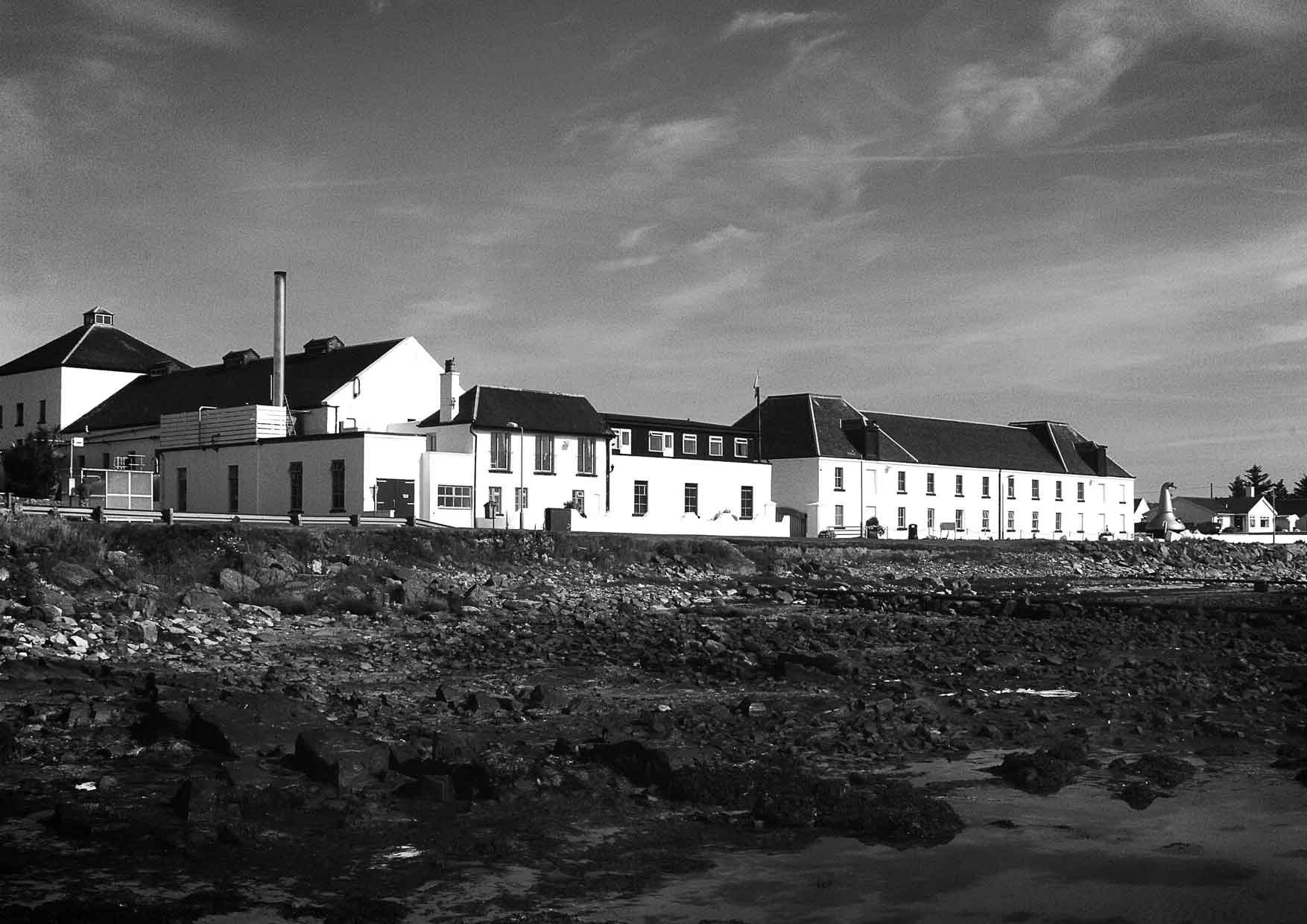
The distillery sits closer to Oslo than to London. That single geographical fact — stark, verifiable, slightly absurd — has done a great deal of quiet narrative work over the years.
And the land itself contributes something no brand team can replicate on a spreadsheet. Highland Park is the only distillery in the world to use Orcadian heathered peat — cut from Hobbister Moor, where sphagnum and centuries of heather growth have produced a peat unlike anything on the Scottish mainland. The smoke it imparts when drying malt is softer, more aromatic, more floral than Islay's briny intensity or the sharper character of mainland cuts. It tastes, if that word applies to an aromatic profile, of where it comes from. The distillery controls over a thousand acres of that moorland and has been drawing from barely two hundred and fifty of them since 1798. There is something quietly formidable about that kind of patience.
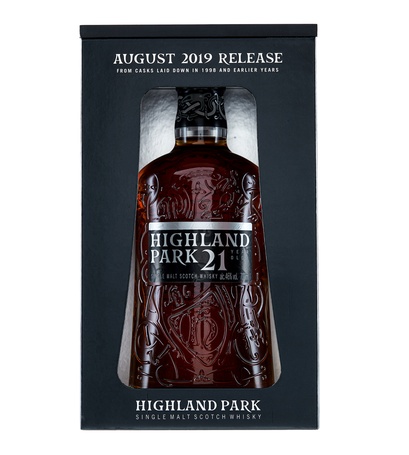
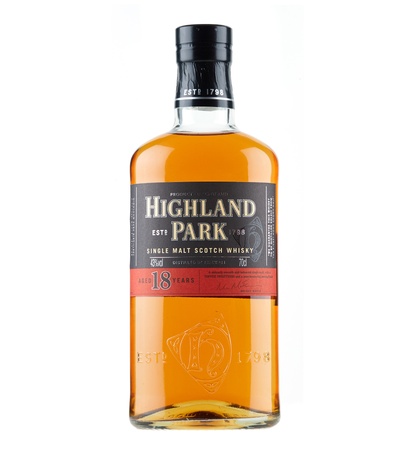
The core range — anchored by the 18 Year Old and the 21 Year Old — remains the clearest articulation of what Highland Park actually is beneath the mythology. The 18, matured entirely in sherry casks since 2004, balances the distillery's signature heathered peat against dried fruit, dark honey, and a warmth that arrives slowly and stays. It is one of those whiskies that rewards patience twice over: once in the warehouse, and again in the glass. The 21 deepens and widens everything, introducing a syrupy stone-fruit complexity and a finish long enough to justify sitting still with it.
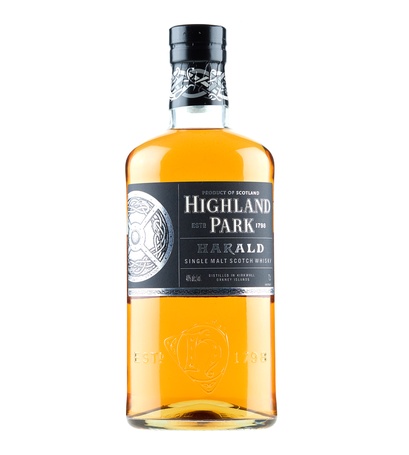
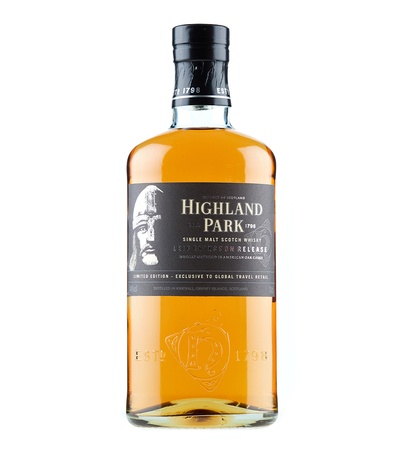
The Harald and Leif Eriksson expressions extend the Viking narrative into the travel retail register — lighter in body, accessible in character, and honest about their purpose. They are entry points into a story rather than its conclusion, and they function well in that role.
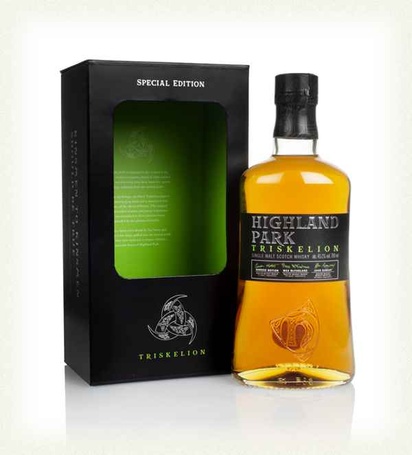
The Triskelion stands apart. A collaboration between three master whisky makers — Gordon Motion, Max McFarlane, and John Ramsay — each contributing a single chosen cask, it was conceived as an exploration of what wood and cask seasoning can draw from the same distillate. First-fill Spanish oak sherry butts, first-fill American oak sherry casks, and ex-bourbon barrels were married at 45.1% ABV. The result is delicately creamy, lightly smoked, with a fresh precision that reveals itself gradually. The name refers to the three interlocked drinking horns of Norse symbolism — a sign connected to Odin, to the mead of poetry, to wisdom obtained through bargain and patience. Whether or not the three whisky makers had that specific mythology in mind when they walked into the warehouses, the resonance holds.
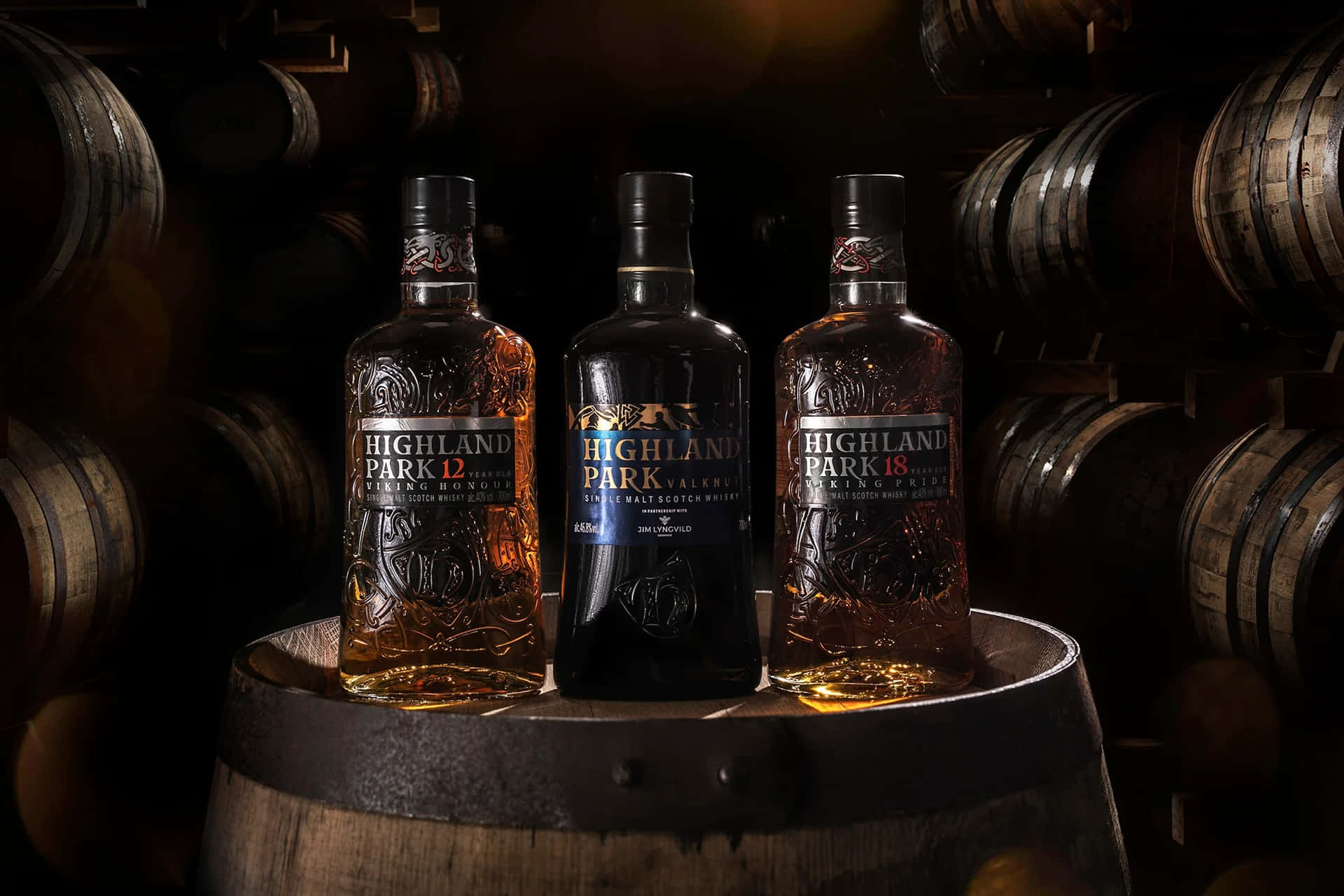
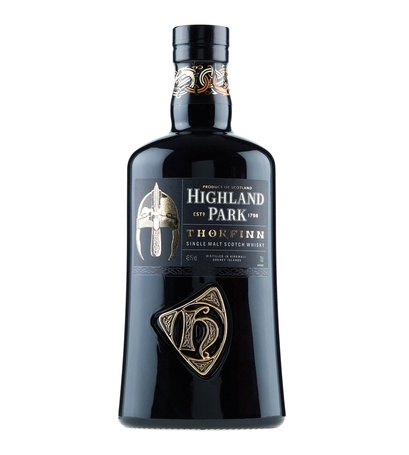
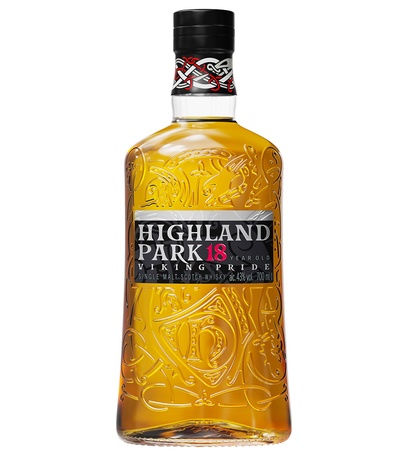
In 2017, Highland Park committed fully to its Viking aesthetic. The bottles were redesigned with engraved Norse carvings modelled after the stave church woodwork at Urnes in Norway. The 12 Year Old became Viking Honour. The 18 became Viking Pride. The Valhalla Collection had already placed Thor, Loki, Freya, and Odin on shelves alongside Marvel’s cinematic versions of the same characters — a piece of cultural timing that generated both interest and a degree of eye-rolling in equal measure.
The criticism that followed was predictable and not entirely unfair. The Viking aesthetic, executed with such totality, risked tipping from identity into cosplay. Sections of the whisky community felt the brand had become a vehicle for its packaging rather than the other way around. The whisky, of course, had not changed at all.
By late 2024, Highland Park entered what might be called its corrective chapter. The Viking helmet was retired. A cleaner design emerged — heather-flecked labels, a sleeker square bottle with ‘Product of Orkney’ pressed into the glass. The campaign, ‘Different by Nature’, pointed not toward mythology but toward the people and the place itself. It was, in retrospect, a return to the original instinct: the story was always there. The job was to frame it, not overwhelm it.
And the whisky, as ever, made the argument more plainly than any packaging could. The peat on Hobbister Moor, the sherry seasoning of the casks, the long cool maturation that Orkney’s climate enforces without asking — these are not brand decisions. They are facts of the place. Highland Park’s most enduring achievement is not that it built a mythology. It is that it had the good sense to recognise one already there, and the discipline, mostly, to let it speak.