Departments
 Departments
Departments
Departments

New to Slowsip? Create Account
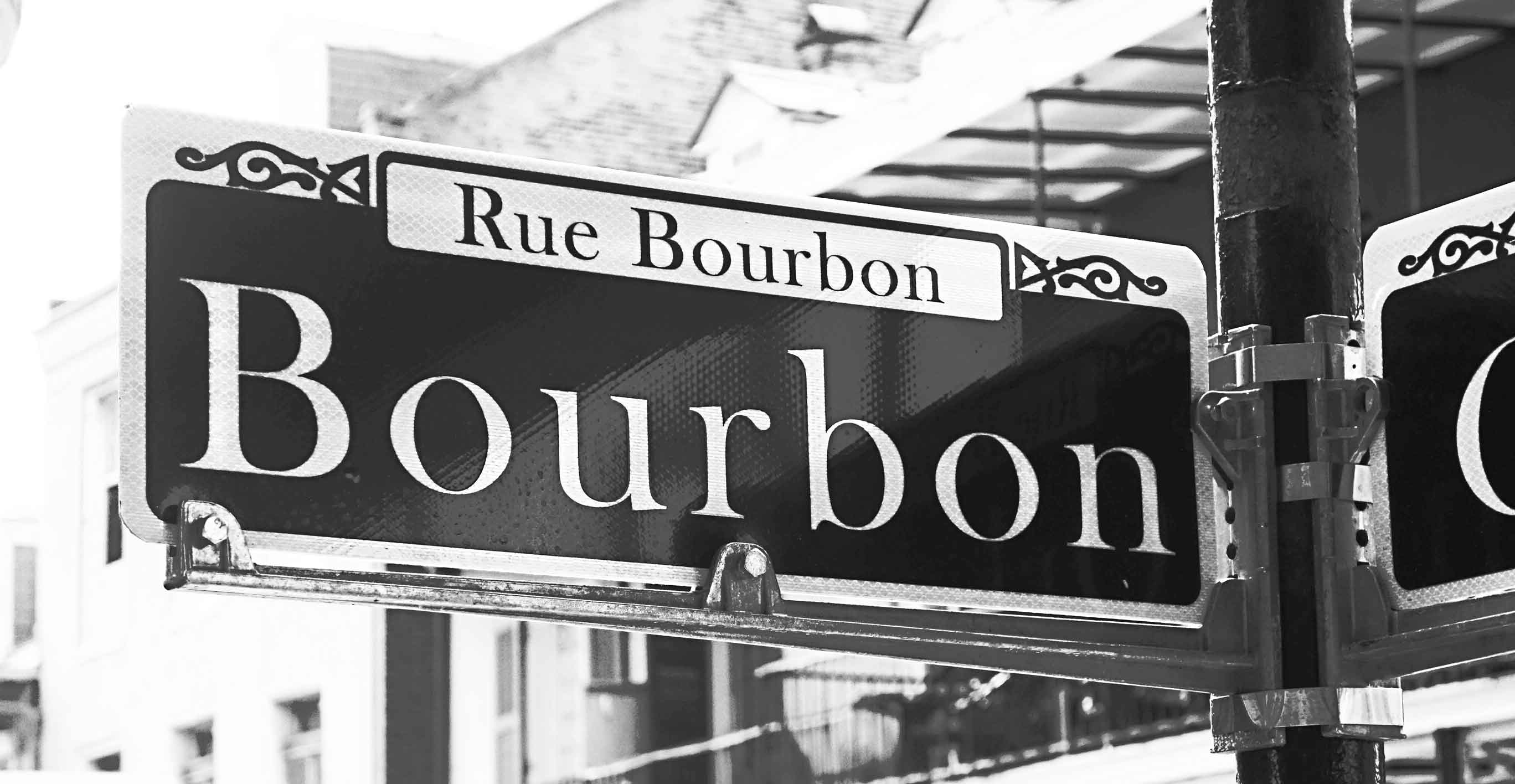
The legal definition of Bourbon is more specific than most people realise, and understanding it changes how you think about the category. To be called Bourbon, a whiskey must be made in the United States from a grain mixture of at least 51% corn, aged in new charred oak containers, distilled to no more than 160 proof, and entered into the barrel at no more than 125 proof. It must be bottled at a minimum of 80 proof. Nothing else can be added except water. These are strict rules, and they produce a spirit of distinctive character: the new charred oak imparts vanilla, caramel, and a sweetness that is baked into the production process rather than achieved through additives, while the corn base provides a roundness and approachability that distinguishes Bourbon from the rye-forward Canadian style or the malted barley character of Scotch.
Kentucky produces around 95% of the world's Bourbon supply — a dominance that reflects the state's particular combination of limestone-filtered water, dramatic temperature swings between summer and winter (which drive the spirit in and out of the oak more actively than in Scotland's cooler climate), and a distilling tradition that traces its roots to the late eighteenth century. But Bourbon is not exclusively a Kentucky product, and the most interesting developments in the category right now are coming from distillers who are questioning the established formulas — experimenting with wheat-forward mash bills, single barrel expressions, and aged statements that challenge the assumption that Bourbon needs to be young to be approachable.
"Kentucky's dramatic temperature swings drive the spirit in and out of the oak more actively than Scotland's cooler climate — producing vanilla and caramel sweetness that is baked into the process, not added afterwards."
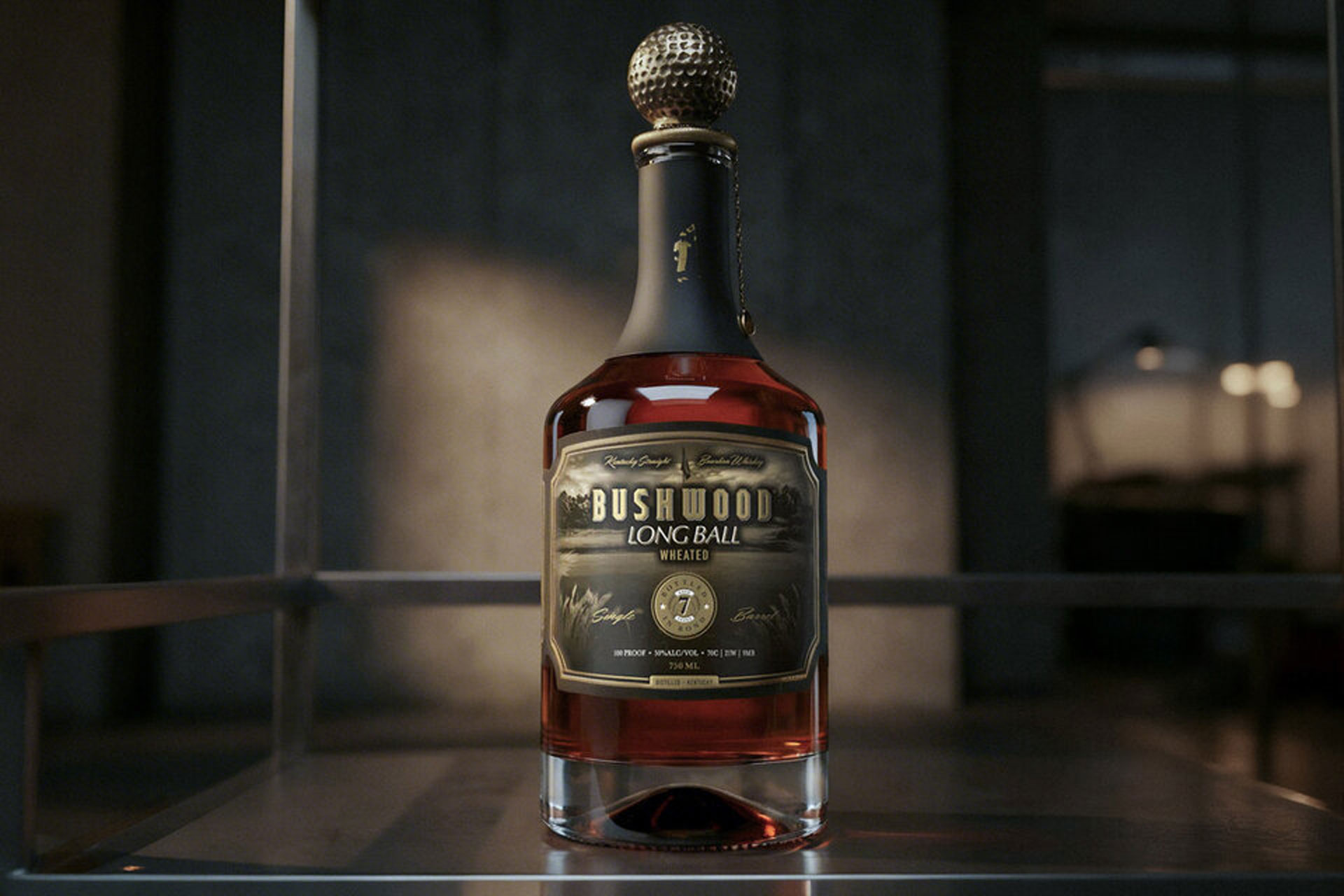
Before turning to the established Kentucky houses, it's worth flagging a US producer that represents the direction the most interesting part of the Bourbon category is moving. Bushwood Spirits — based in the United States and not yet available in the UK — is building a range that combines genuine craft with an approachable, lifestyle-forward identity that should resonate with a SlowSip audience. The Back 9 expression is an 11-year Kentucky single barrel Bottled in Bond Bourbon — the Bottled in Bond designation meaning it meets a strict set of federal standards: aged at least four years, produced in a single distillation season by a single distiller at a single distillery, and bottled at exactly 50% ABV. That's a meaningful quality commitment in a category where many claims are loosely defined.
The Wheated Bourbon uses wheat rather than rye as the secondary grain in the mash bill — a choice that produces a softer, rounder, more approachable spirit than the spicier rye-forward expressions. The Stillwater Perennial Low-Rye Whiskey takes a different approach again — a considered, aged expression that demonstrates genuine range from a distillery that is still establishing its UK footprint. Worth watching closely.
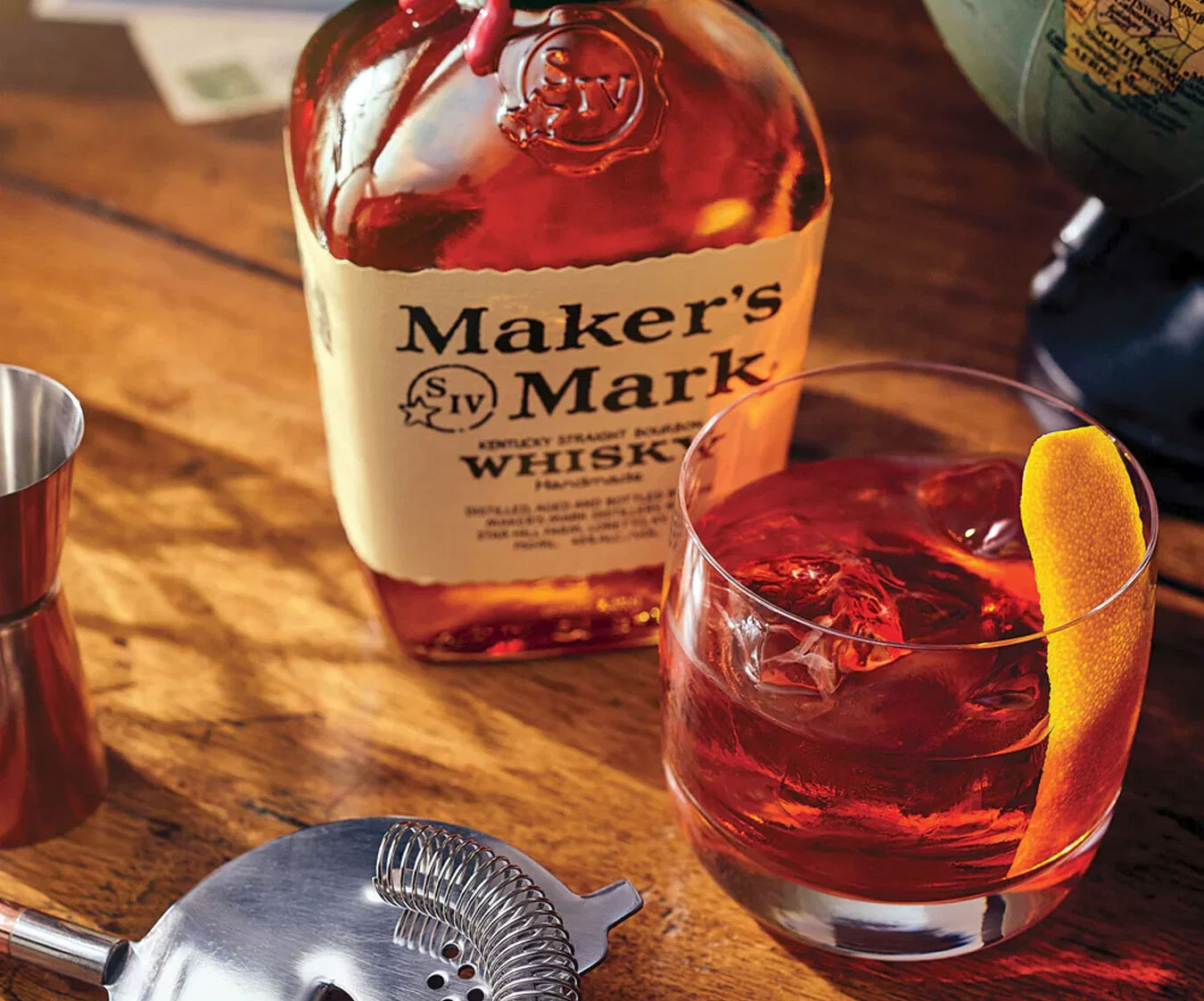
Maker's Mark is the reference point for wheated Bourbon in the mainstream market — the distillery that proved, over several decades of consistent production, that using wheat as the secondary grain rather than the more common rye produced a spirit of broader appeal without sacrificing quality. The red wax seal has become one of the most recognisable packaging gestures in the spirits industry, and the liquid inside has maintained its character through the brand's considerable growth.
The standard Maker's Mark is the benchmark wheated Bourbon — soft, round, with vanilla and honey from the wheat mash bill and the red winter wheat the distillery has used since its founding in 1954. At £36 for a litre it is among the better-value bottles at this quality level, and the one to reach for if the goal is understanding what wheated Bourbon tastes like before investing in the higher expressions.
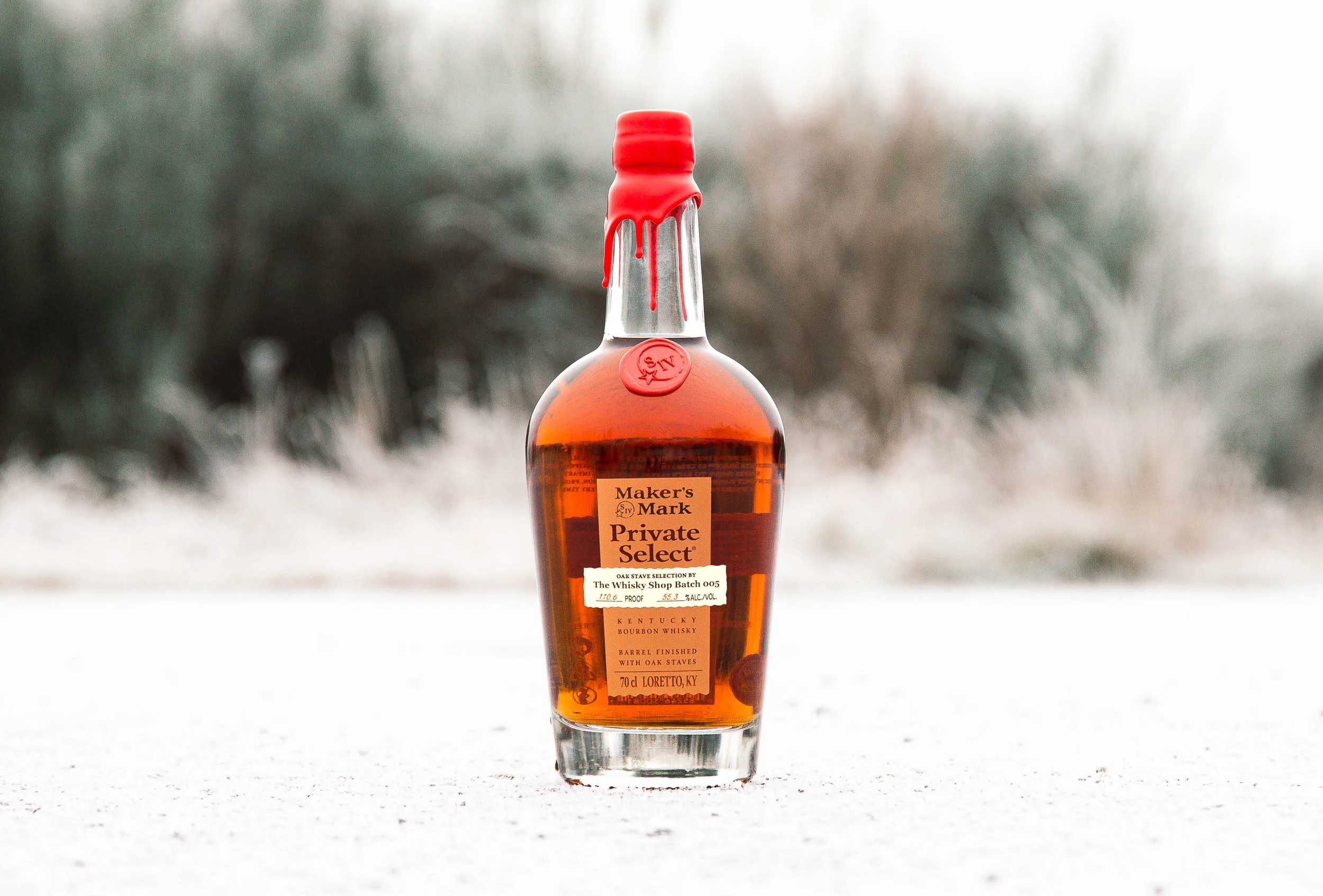
The Private Selection is Maker's Mark's most ambitious expression — a programme that allows retailers and restaurants to create their own finishing combinations using a selection of different wood stave types inserted into the barrel for additional maturation. Each Private Selection is therefore unique to its retailer, making this the most characterful and variable bottle in the range. At £70 it is a premium purchase that rewards the attention of a drinker who wants to see how far the wheated Bourbon style can be taken.
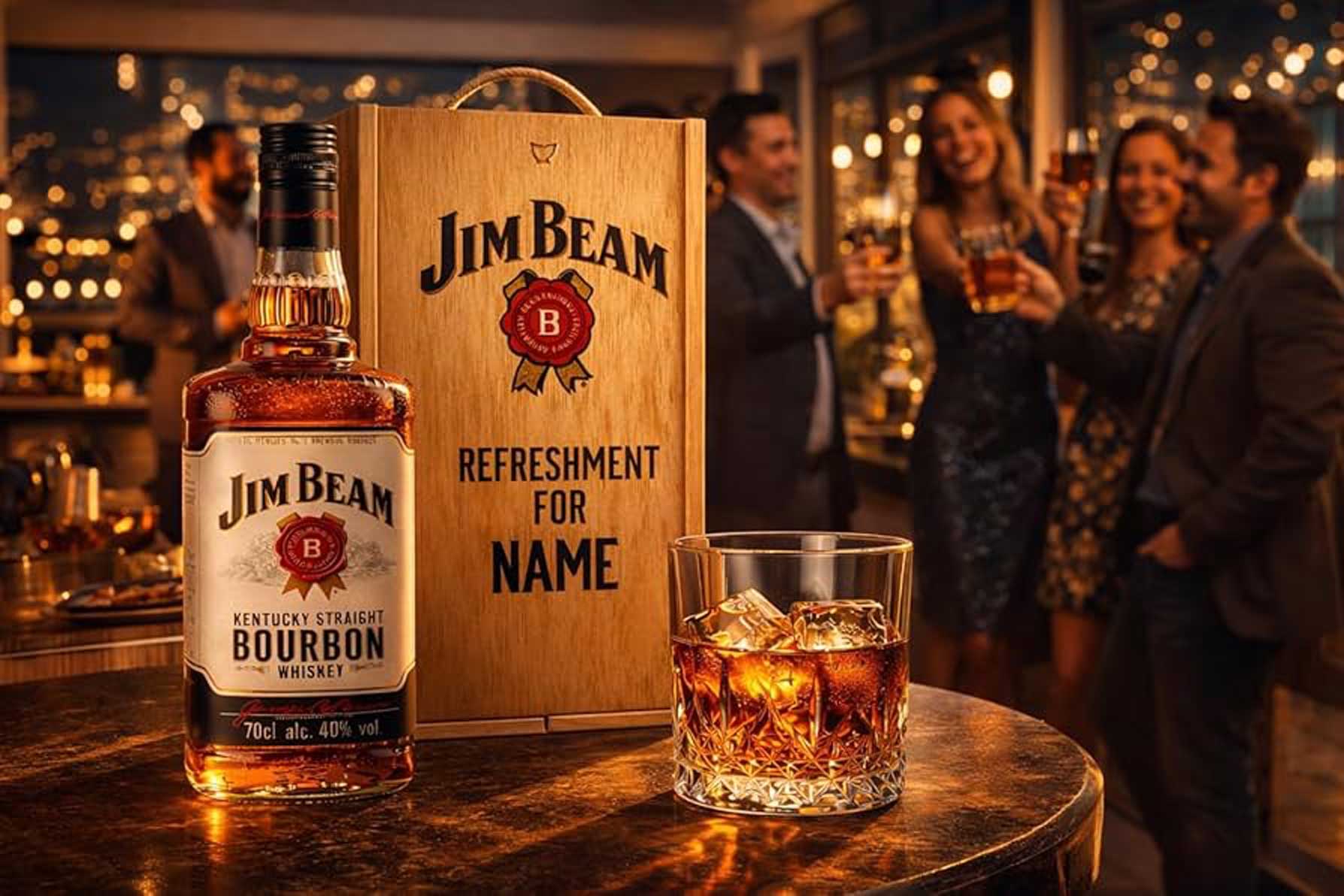
Jim Beam is the world's best-selling Bourbon, which tends to make serious whiskey drinkers dismiss it in the same way that serious wine drinkers dismiss Gallo. The dismissal is understandable and, at the standard expression level, not entirely unfounded — the White Label is a reliable, inexpensive Bourbon that makes no ambitious claims. But the Jim Beam family of expressions includes some genuinely interesting whiskeys that the brand's volume reputation obscures, and the core expression deserves more credit than it typically receives for what it is: a consistently well-made, approachable Bourbon at a price point that makes it the right gateway into the category.
The standard Jim Beam is four-year-old Kentucky Straight Bourbon from the Beam family's own yeast strain, which has been used continuously since Prohibition ended in 1933. The flavour profile is classic: corn sweetness, light vanilla, a slightly sharp rye note on the finish that distinguishes it from the wheated style. At £26 for a litre it is the most accessible entry in the edit and the right bottle for mixing — it holds its character in a cocktail in a way that more expensive expressions sometimes don't justify.
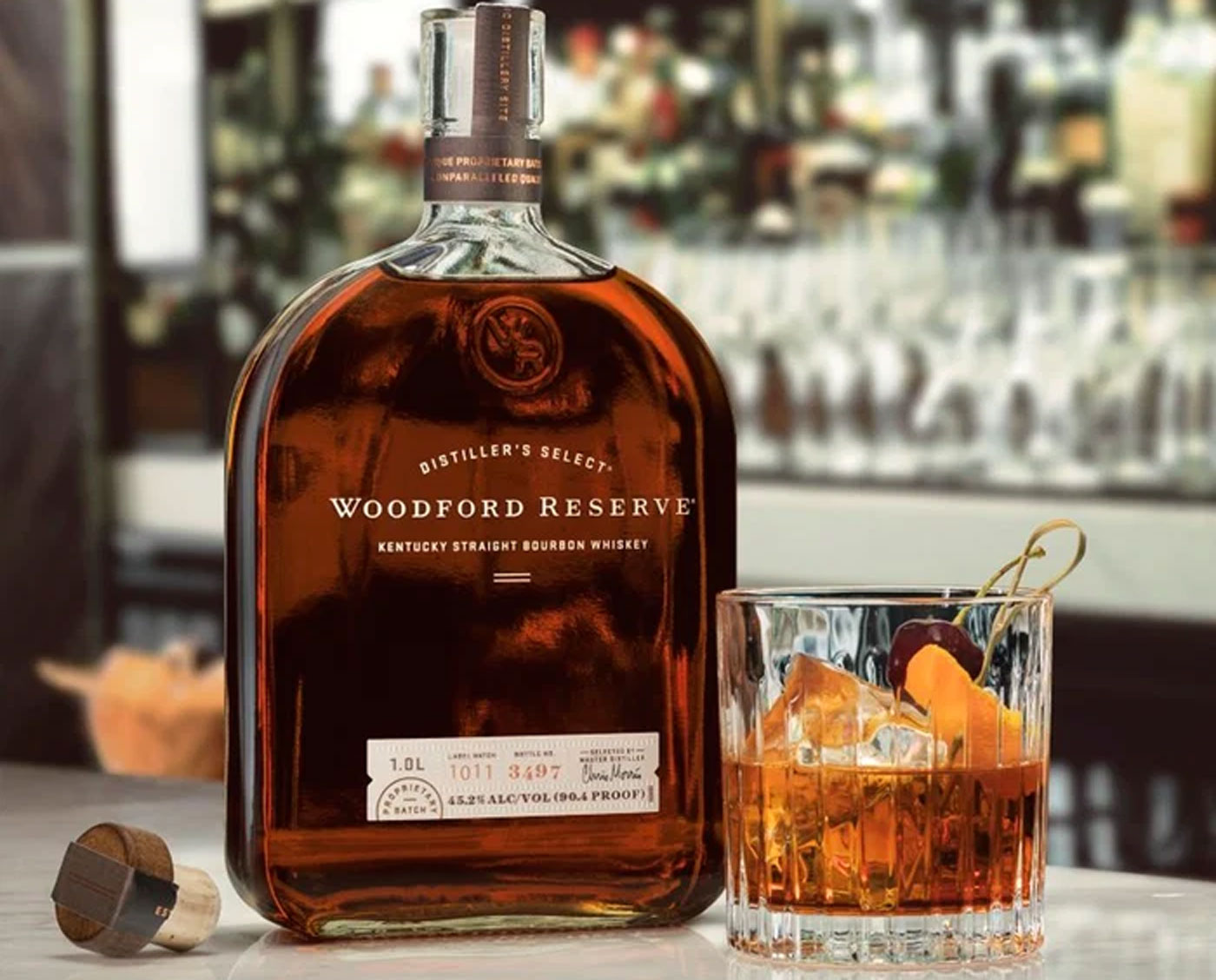
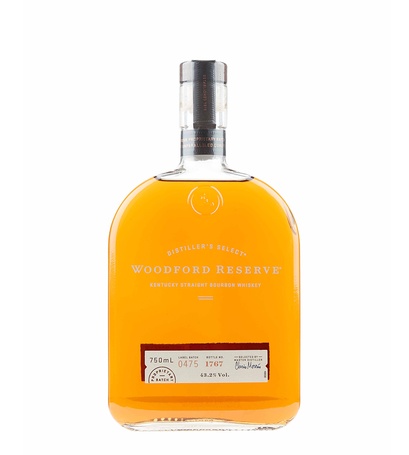
Woodford Reserve occupies a specific and well-chosen position in the Bourbon market: premium enough to attract the serious whiskey drinker, accessible enough to appear in airport duty-free. The distillery, in Versailles, Kentucky, is one of the smallest in the state by volume and uses a triple distillation process in copper pot stills — unusual in a category dominated by column distillation — before ageing in new charred American white oak barrels in stone maturation warehouses.
The result is a Bourbon of genuine complexity for the price: dried fruit, vanilla, chocolate and spice on the nose, with a rich mid-palate and a long finish that carries traces of tobacco and leather. The triple distillation produces a spirit of unusual richness and concentration relative to the age statement. At £36 it is one of the more complete bottles in the accessible premium Bourbon category and the expression that most consistently surprises drinkers who approach it expecting something simple.
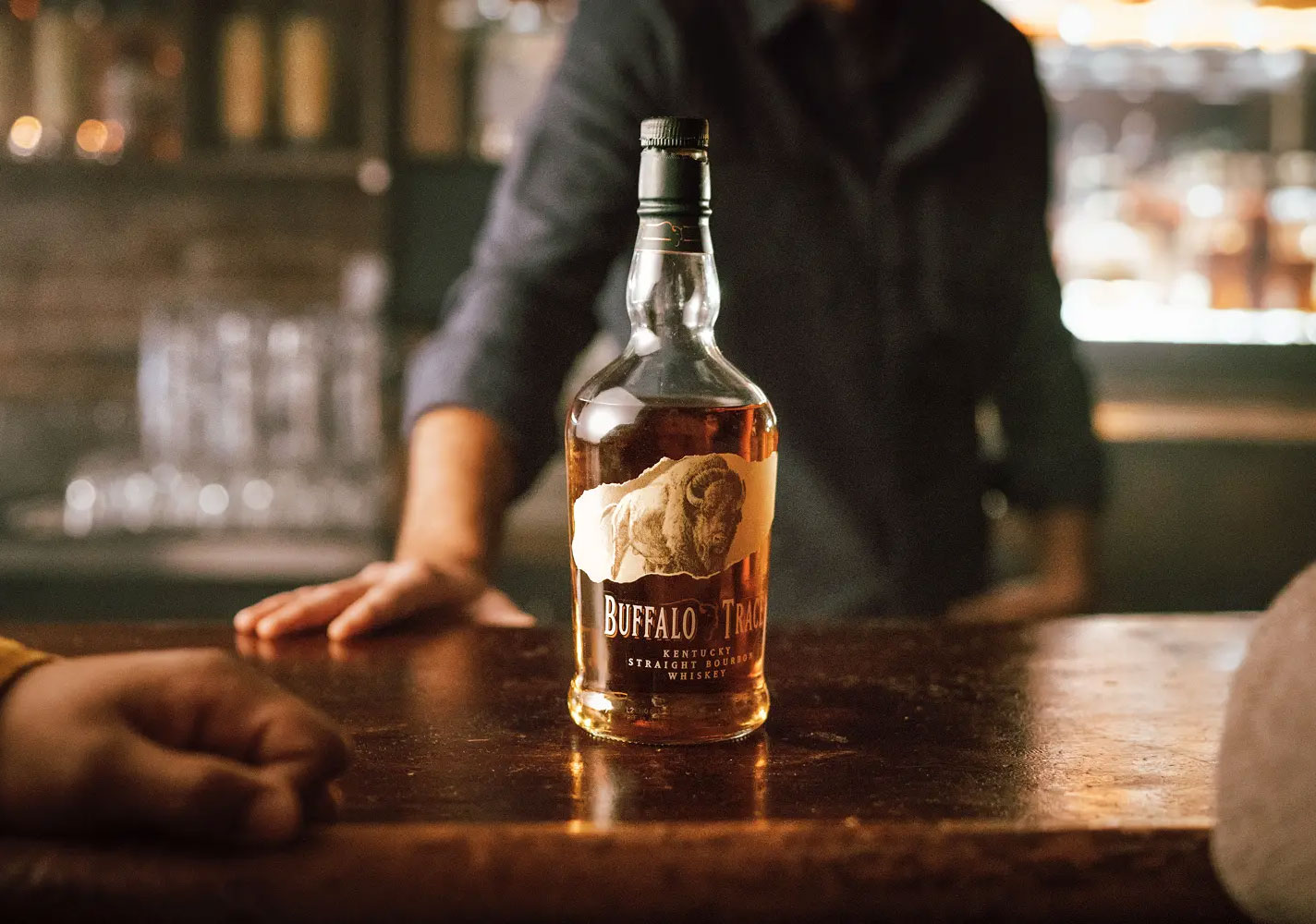
Buffalo Trace is the most consistently celebrated Bourbon distillery in Kentucky — the address behind Pappy Van Winkle, Eagle Rare, and Blanton's, alongside the Buffalo Trace expression itself. The distillery has been producing whiskey on the same site in Frankfort, Kentucky, since 1773, and the Buffalo Trace expression is the entry-level bottle from a house whose higher expressions are among the most sought-after spirits in the world.
At £26 the Buffalo Trace expression is one of the most undervalued bottles on the SlowSip catalogue — a complex, well-aged Bourbon from one of the world's most respected distilleries at a price that bears almost no relation to the prestige of its producer. Caramel, mint, molasses and spice: a Bourbon that has the structure of something considerably more expensive and the approachability of something designed to be drunk rather than collected. The standard against which most other Bourbons at this price are measured, and one that most of them don't reach.
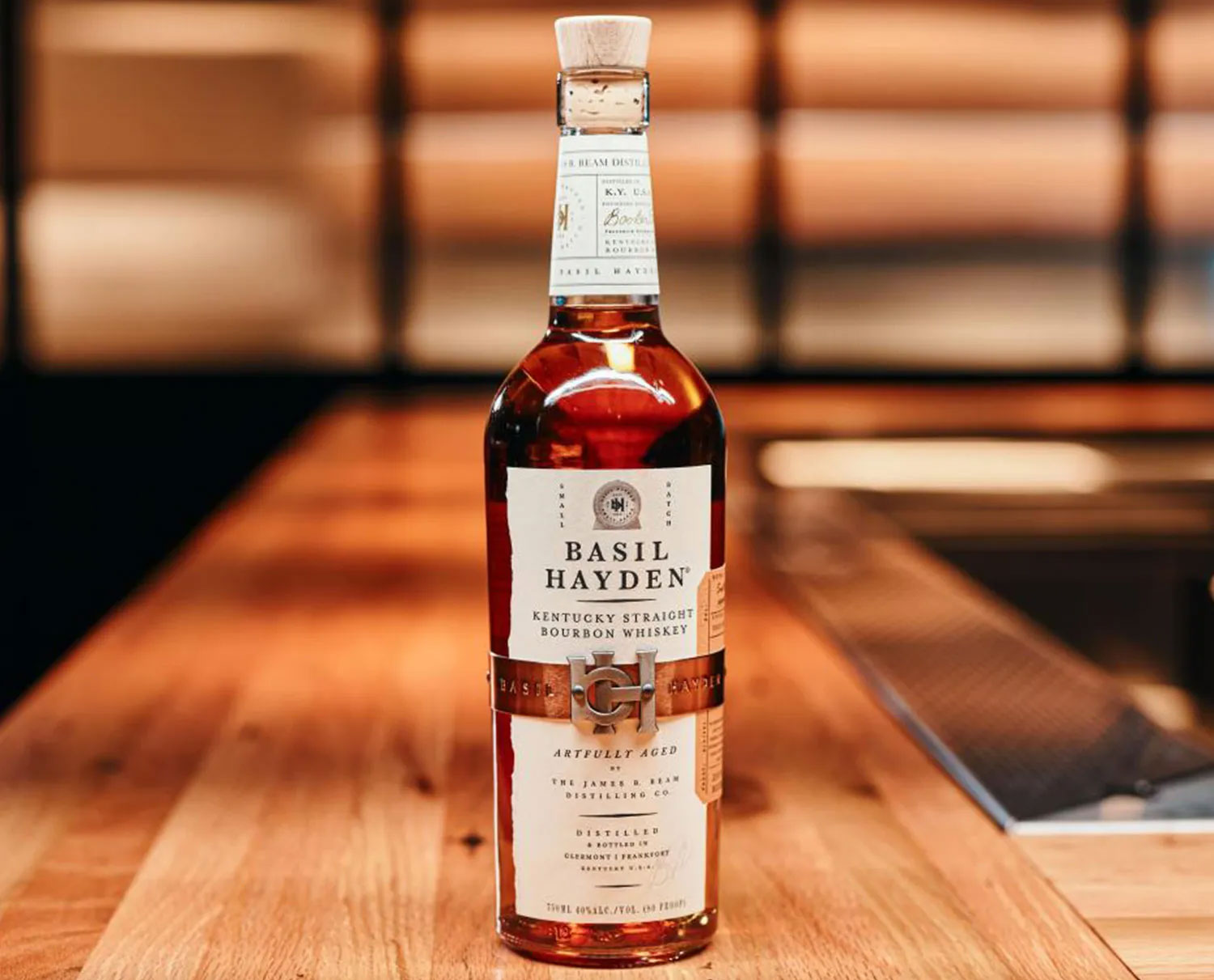
Basil Hayden's occupies a specific and well-regarded position in the Jim Beam family — one of four Small Batch expressions developed in the 1990s to compete at the premium end of the Bourbon market. Where standard Jim Beam is a straightforward four-year-old rye-forward Bourbon, Basil Hayden's uses an unusually high-rye mash bill — around twice the rye content of standard Bourbon — producing a lighter, more delicate style. The house was named in honour of Basil Hayden Sr., a Kentucky pioneer distiller from the 1790s known for his high-rye recipes.
The style will not satisfy drinkers looking for the rich sweetness of Maker's Mark or the depth of Woodford Reserve. What it offers instead is a more restrained and approachable Bourbon — lighter on the palate, with peppery rye spice, gentle oak, and a clean finish that makes it one of the more food-friendly expressions in the category. Pour it alongside Maker's Mark and the contrast is immediately instructive: two very different arguments about what Bourbon can be, both made convincingly.
The standard expression communicates the house's high-rye proposition clearly: cracked pepper and rye bread on the nose, a relatively light and clean body, a finish with more spice than sweetness. At £58 for the litre it sits correctly in the upper mid-range — priced above the everyday Bourbons, below the prestige expressions, and delivering genuine character in the gap between.
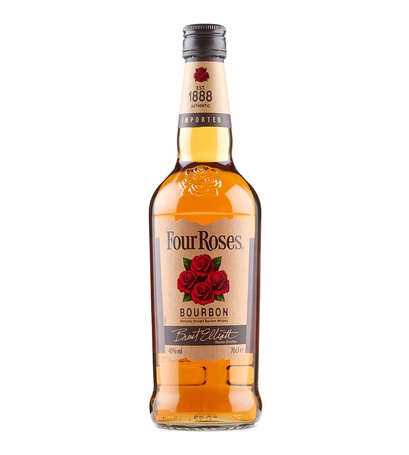
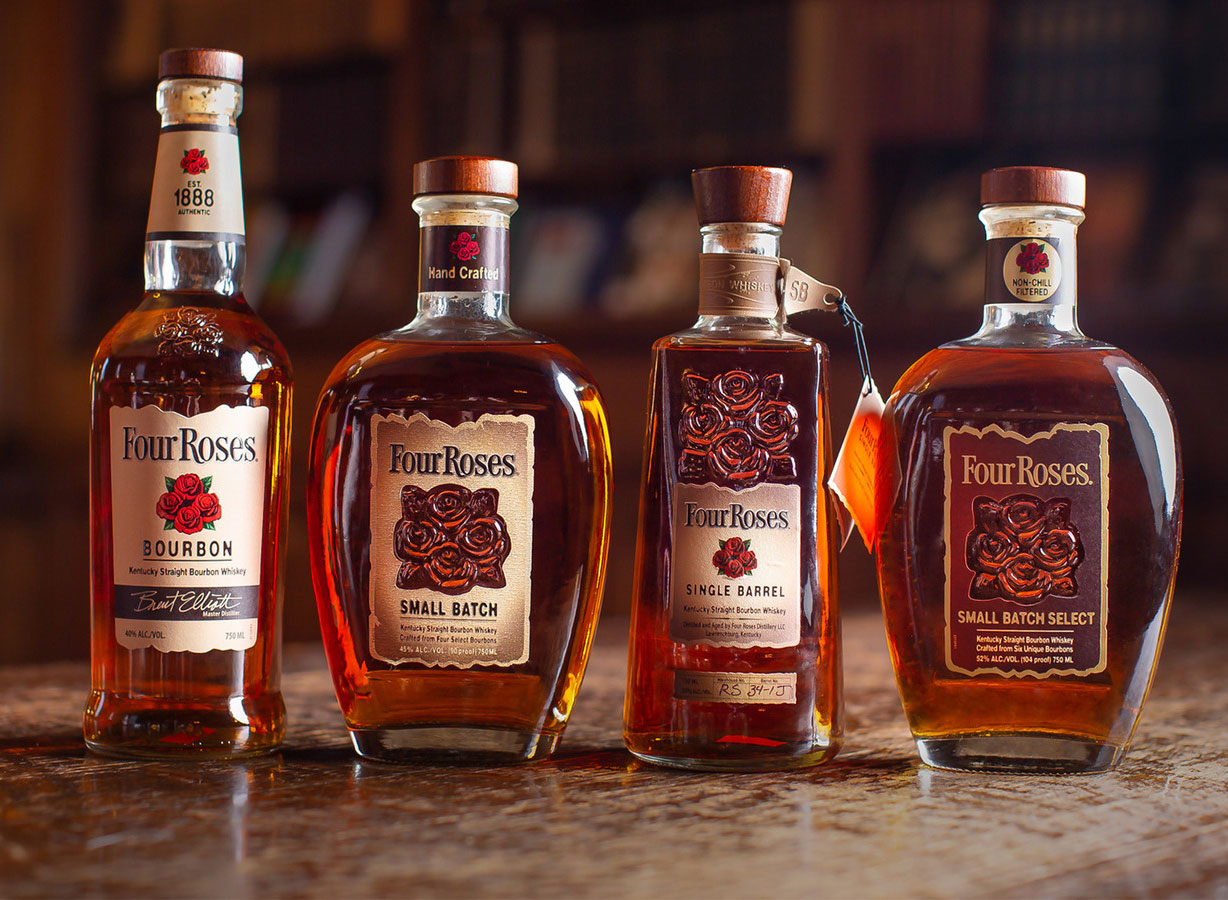
Four Roses is a distillery with an unusual production philosophy: rather than a single mash bill, they work with five different yeast strains and two mash bills, producing ten separate Bourbon recipes that are then combined into various expressions. The standard Yellow Label is the most accessible result — a blend of multiple recipes that produces a softer, more floral Bourbon than the spicier Kentucky norm. Honey, light fruit, a gentle finish: a well-made, approachable expression at £30 that represents good value from a distillery with genuine craft credentials.
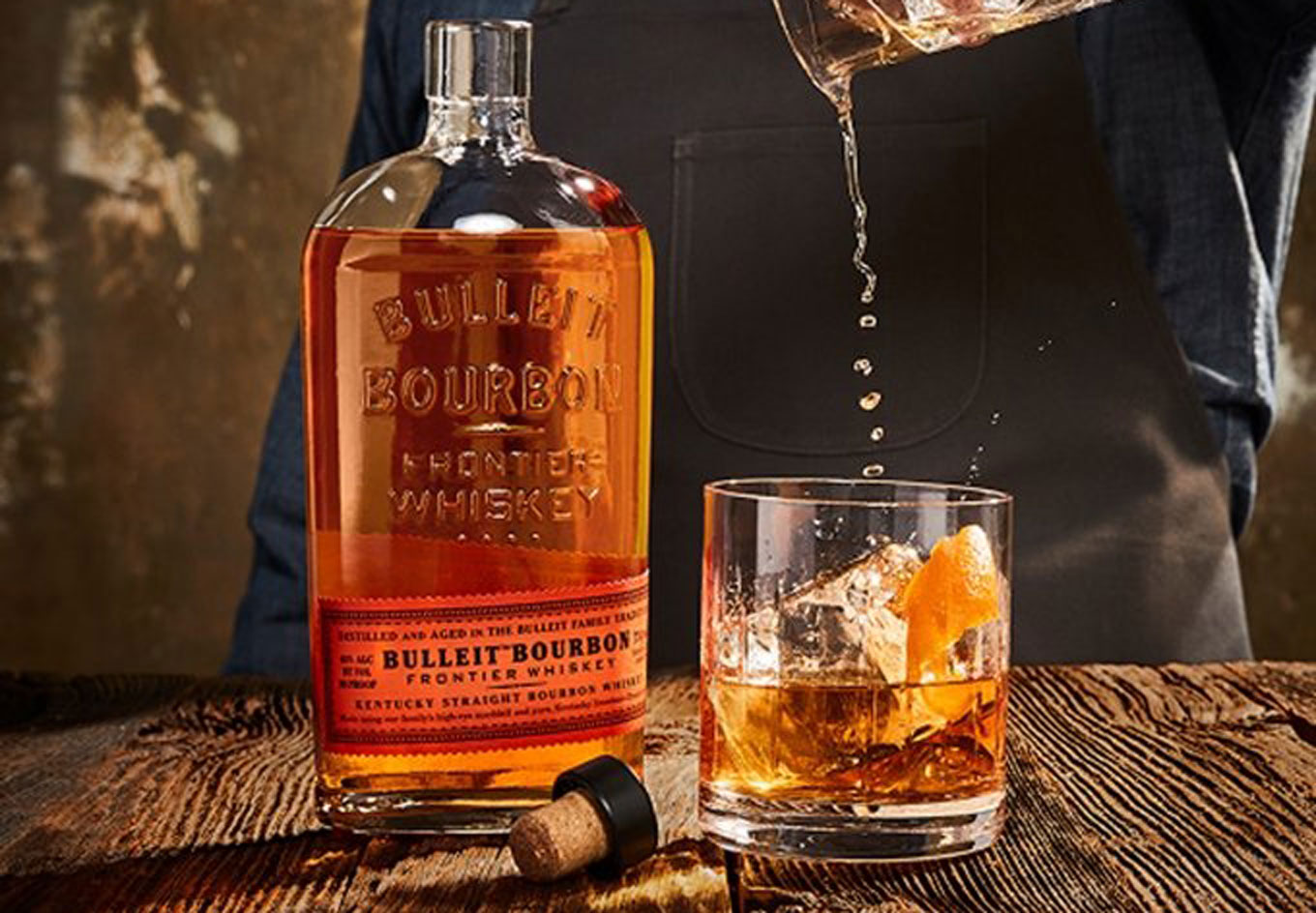
Bulleit uses a high-rye mash bill — around 28% rye, significantly above the Kentucky average — which produces a spicier, drier Bourbon than the wheated expressions. The style is distinct: less sweet, more grain-forward, with a pepperiness that makes it particularly well-suited to mixing. At £36 for a litre it is the right choice for anyone who wants a Bourbon with more character than the standard expressions at this price and doesn't mind that character arriving with a sharp edge.
The argument for Bourbon as a category deserving serious attention is simply the liquid. Not the heritage — though the heritage is genuine — and not the marketing, which has been extensive enough to create a premium positioning that the category's core expressions don't always justify. The argument is that the best Bourbons, made under strict legal constraints from American corn and aged in new charred oak, produce a spirit of distinctive, complex character that rewards the same kind of attention that serious Scotch or Cognac drinkers bring to those categories. Woodford Reserve and the Buffalo Trace expression at £26 make this argument more convincingly than most spirits at twice the price. The Maker's Mark Private Selection makes it at the premium end. And Bushwood, making its way toward the UK market, suggests that the craft end of American whiskey is only going to get more interesting.