Departments
 Departments
Departments
Departments

New to Slowsip? Create Account
Last week's Speyside guide covered the valley that produces more whisky than anywhere else in Scotland. This week turns to the opposite end of the country's whisky geography — the islands that ring the Scottish coastline, each with a single distillery (or two), each producing whisky shaped by the wind, the water, and the isolation of its particular place. Julian Mercer on the island malts that deserve more attention than they receive.
The Scottish whisky regions are defined more by geography than by any unified production style, and nowhere is this more apparent than on the islands. Speyside has its river valley and its accumulated centuries of distilling tradition. Islay has its peat bogs and its particular relationship with the sea. The other islands — Skye, Orkney, Mull, Jura, Arran — each have one distillery, sometimes two, operating in relative isolation and producing whisky shaped by conditions that no mainland distillery can replicate.
The official Scotch Whisky Regulations do not recognise the Islands as a distinct region — they are technically part of the Highlands. In practice, the distinction is meaningful. Island whiskies carry a character shaped by maritime climate, Atlantic weather, and the specific geology and water sources of each island. No two taste alike. What they share is a sense of place that is more immediately apparent than in most Speyside expressions — the environment in the glass is harder to ignore when the environment itself is more extreme.
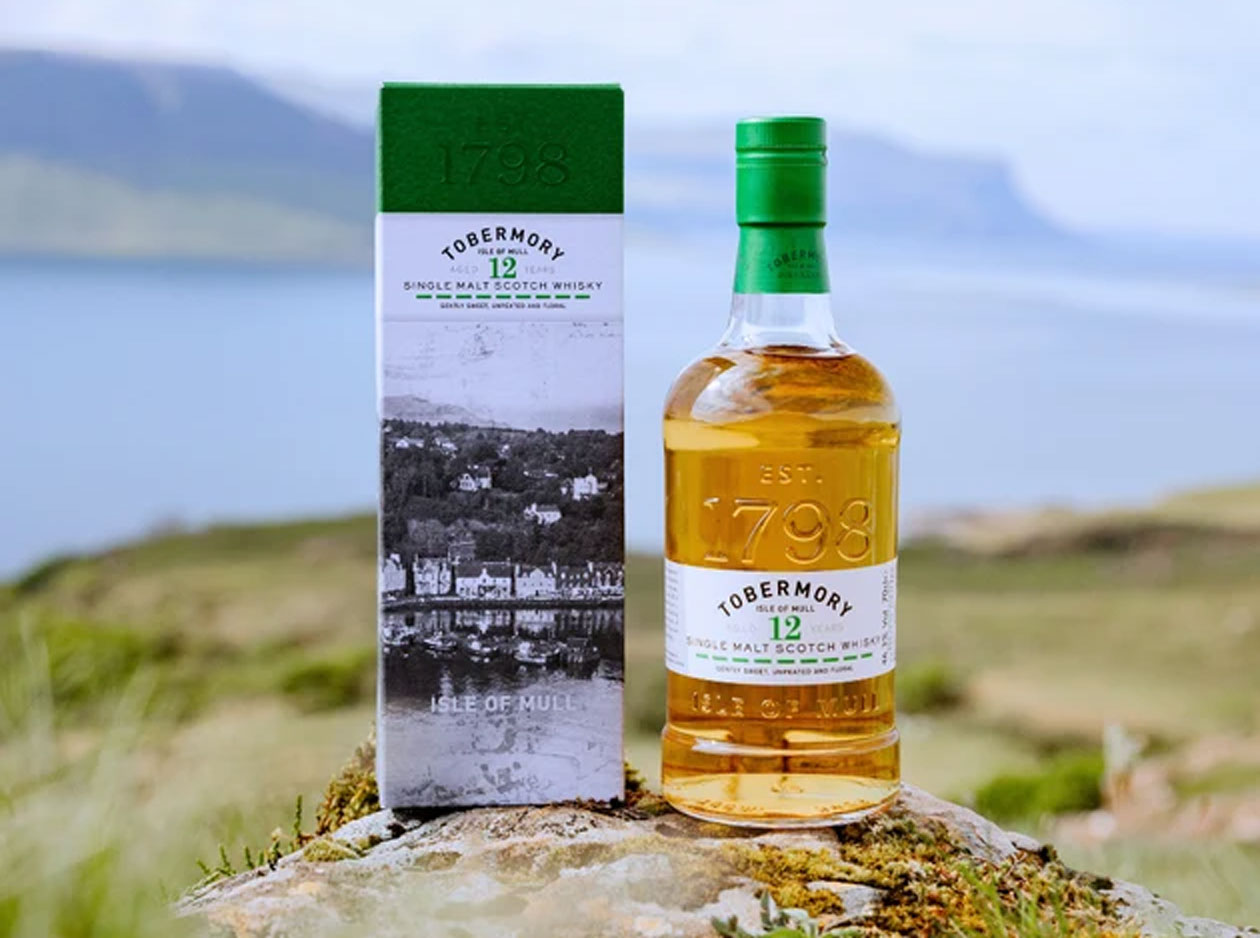
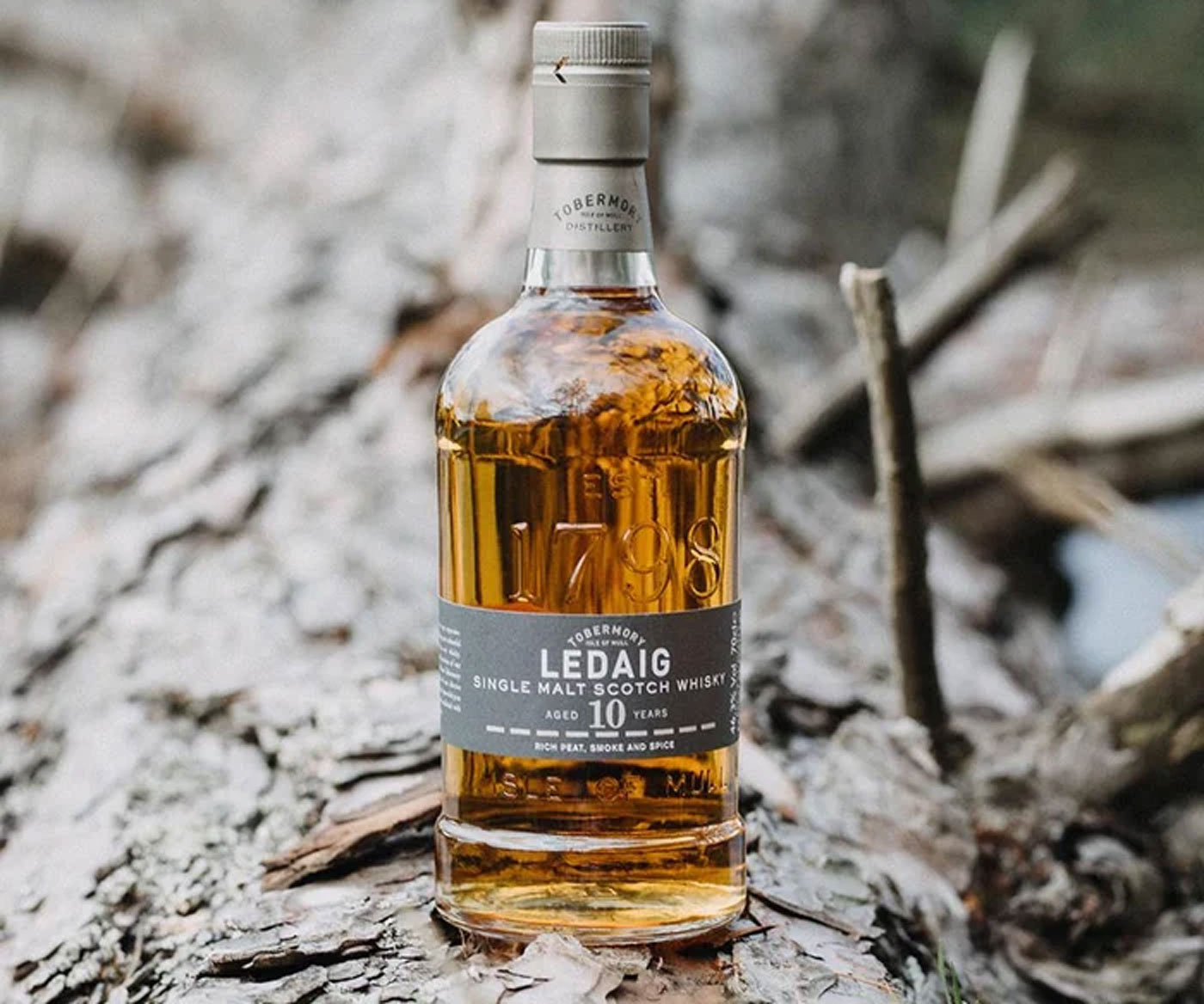
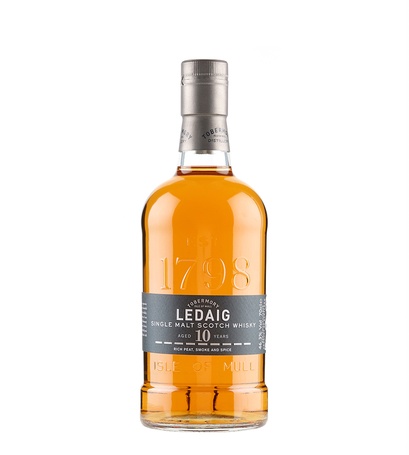
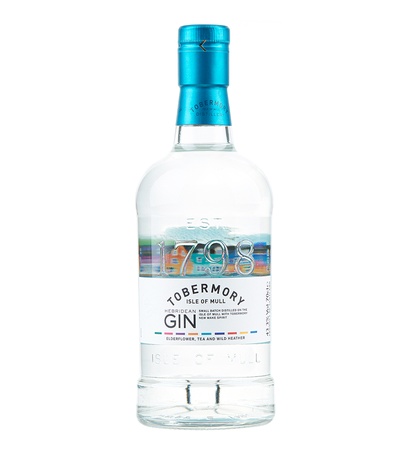
Tobermory Distillery on the Isle of Mull is the source of two entirely different whiskies, which is unusual in the industry and makes it one of the more interesting addresses in the island category. Tobermory — the unpeated expression — uses water drawn from the Mishnish Lochs above the town, producing a lighter, more fruity style. Ledaig (pronounced 'letch-ik') is the heavily peated expression from the same stills, using malted barley dried over peat to produce a smokier character that draws comparisons with Islay despite Mull being a different island with different peat and different water.
The distillery was founded in 1798 — one of the oldest on the islands — and has had a turbulent history of closures and reopenings that has made consistent long-aged expressions rare. What is consistently available represents genuinely good value for the quality delivered.
Tobermory's standard expression carries the distillery's unpeated character: light, slightly sweet, with a maritime quality that speaks to the island setting without the smoke of the Ledaig. Citrus, honey, a gentle coastal saltiness on the finish. At £38 it is the most affordable entry to a distillery that receives a fraction of the editorial attention its quality warrants. Pour it alongside anything from the sea.
Ledaig 10 Year Old is where Mull's peated argument becomes clear. The same distillery, the same stills, the same island water — but the use of heavily peated malt produces a whisky of dramatically different character. Medicinal, coastal, smoke-forward with a sweetness underneath that the Islay peated malts sometimes suppress. At £29 it is one of the more interesting peated whiskies in the accessible price tier, and for those who find Laphroaig or Lagavulin too intense, Ledaig provides a softer introduction to the style.

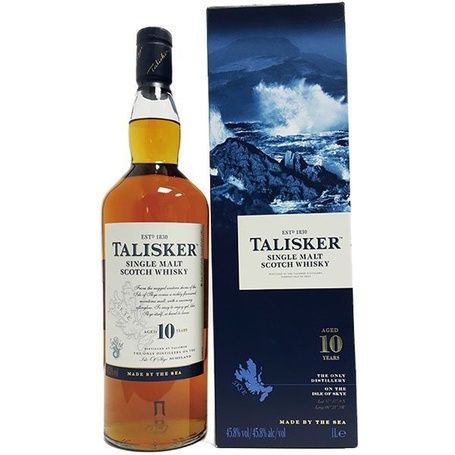
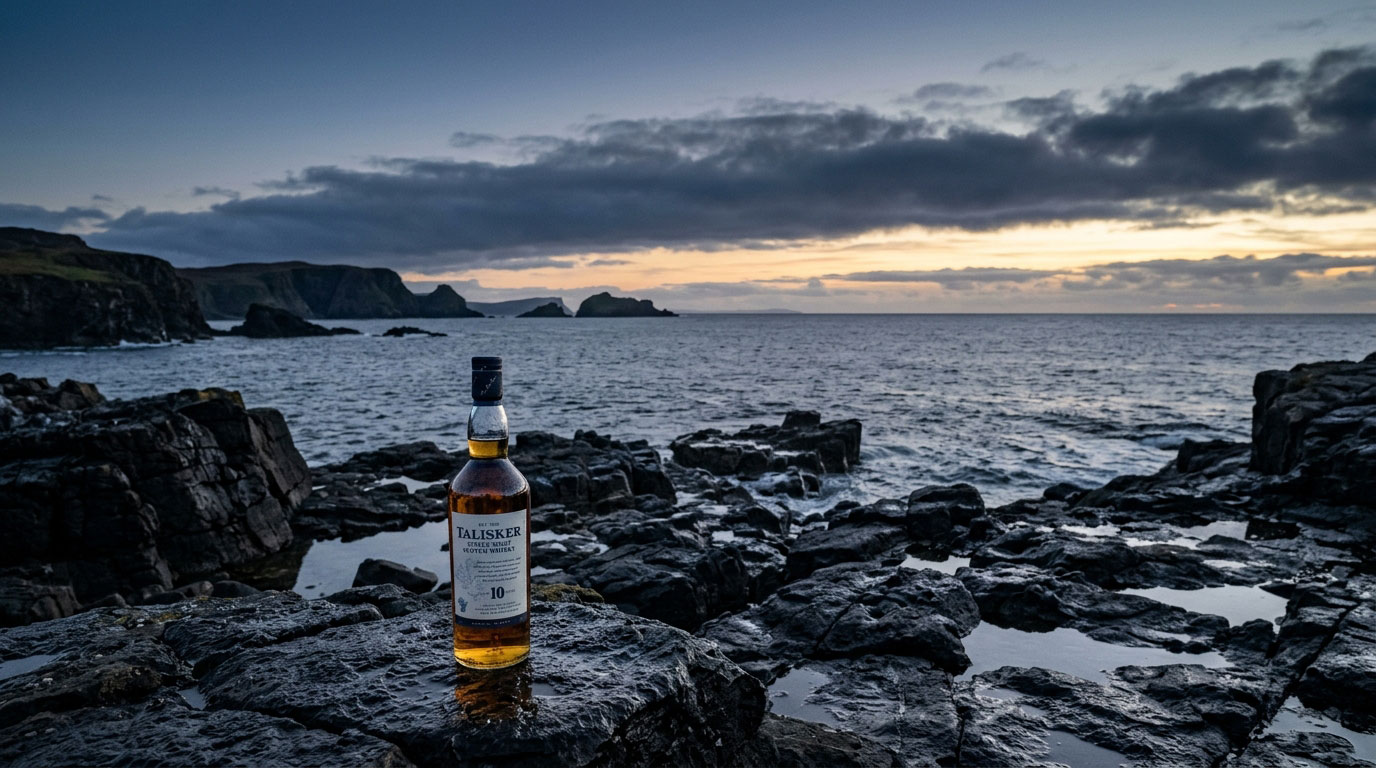
Talisker is the most famous island malt and the one that most effectively communicates what maritime whisky means. The distillery sits on the western shore of Loch Harport on the Isle of Skye, exposed to Atlantic weather that shapes both the maturation environment and, according to those who make it, the character of the spirit itself. Founded in 1830 by Hugh and Kenneth MacAskill, it has been continuously producing whisky — with a brief closure during World War Two — ever since.
The Talisker character is immediately distinctive: a warmth that builds slowly, a peppery finish that has become the distillery's signature, and an underlying sweetness that provides balance. The maritime quality is not merely a marketing story — the proximity to the sea genuinely affects how the spirit develops in the barrel.
Talisker 10yr is the benchmark expression and one of the most reliable single malts at the £42 price point. Ten years in American oak ex-bourbon casks have produced a whisky of considerable complexity: sweet malt, dried fruit, a marine saltiness, and the characteristic pepper finish that arrives long after the glass is empty. It is a whisky that demonstrates its island origins without needing to announce them, and one of the clearest arguments for the distinctiveness of island terroir in Scotch whisky.
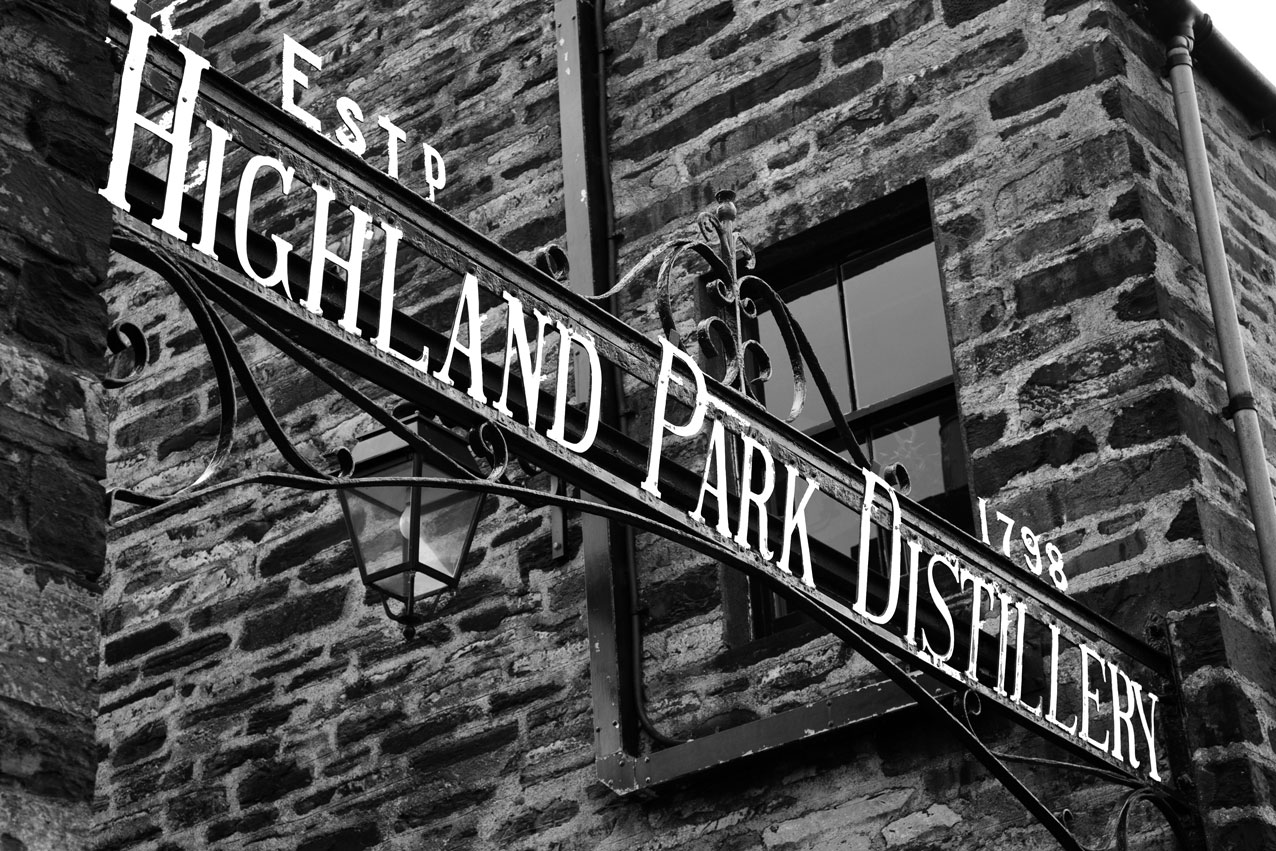
Highland Park sits on Orkney — further north than most of mainland Scotland, closer to Bergen than to London — and produces what is regularly described as the most complete whisky in Scotland. The claim is subjective but not easily dismissed. The distillery makes its own malt, using Orcadian peat from the Hobbister Moor to dry a proportion of the barley — a practice that most distilleries abandoned decades ago in favour of buying pre-malted barley. The result is a peat character that is subtler and more heathery than the more aggressive Islay style, combined with a honey and dried fruit character from the predominantly sherry-influenced maturation.
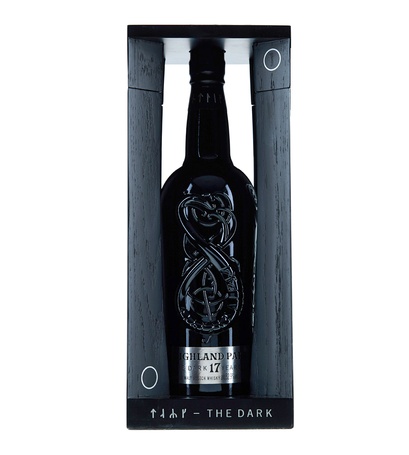
The Highland Park Dark (part of the Light and Dark series) takes a darker, richer approach than the standard age-statement expressions — fuller sherry influence, darker fruit, more weight on the palate. At £29.80 it is one of the more accessible premium expressions currently available from the distillery and a useful demonstration that Highland Park's quality extends well beyond the standard 12yr expression. The heather-smoke character is present but restrained, the dried fruit dominant.
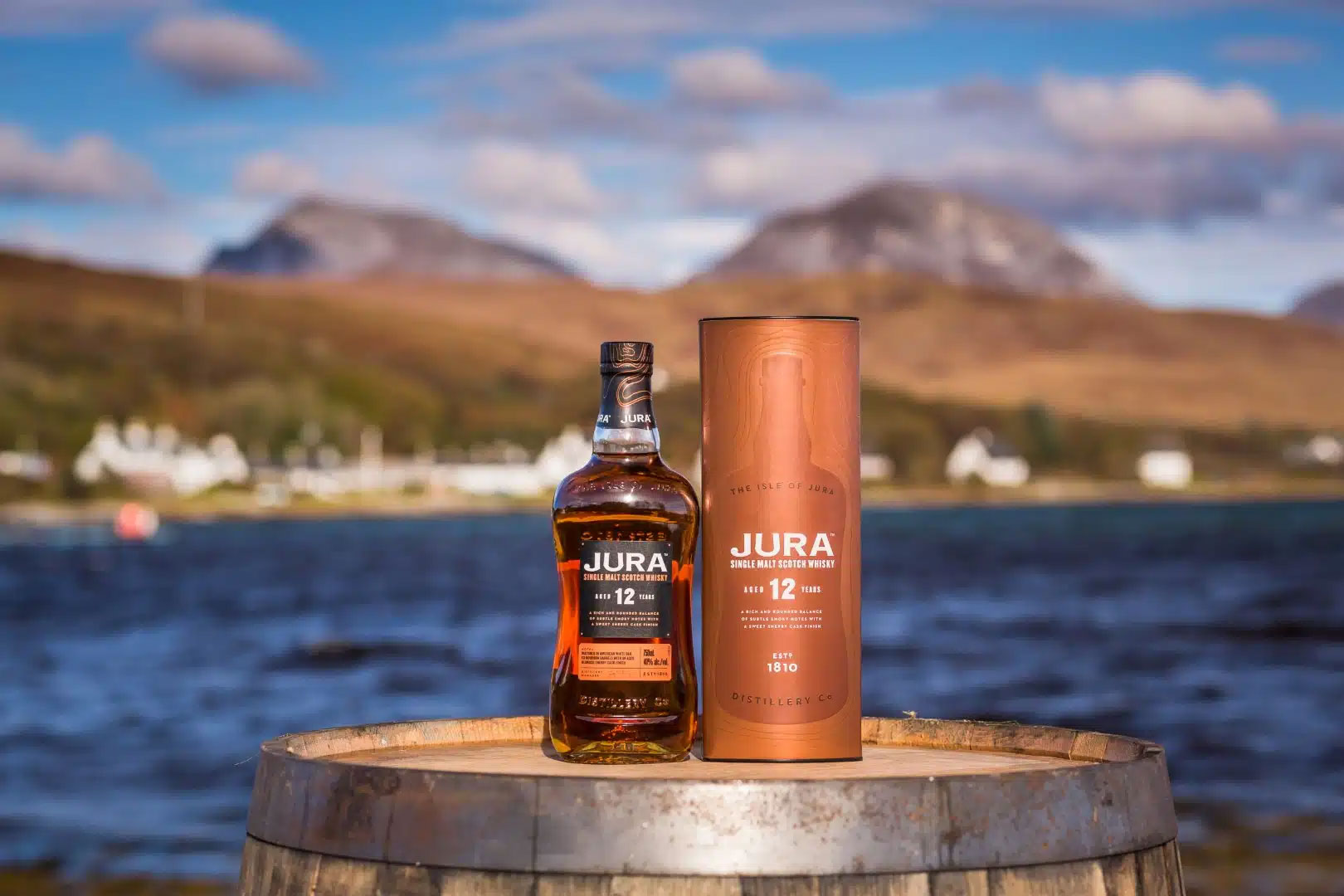
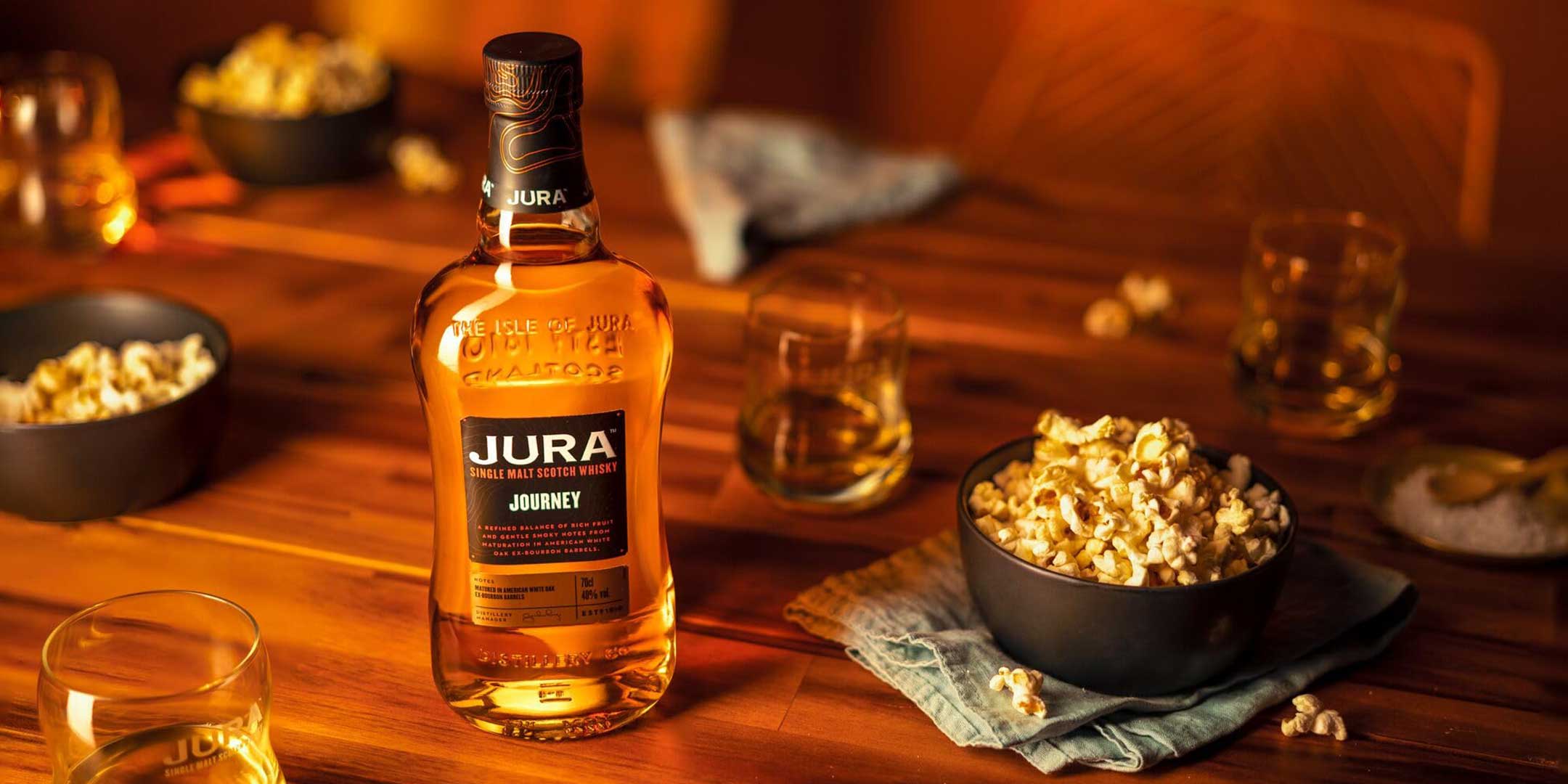
Jura is the second-largest of the Inner Hebrides and has a population of around 200 people — which makes its single distillery one of the most significant employers on the island. The distillery was rebuilt in 1963 by the island's landowners specifically to sustain the local community, which gives it a social context that most whisky production lacks. The character of Jura whisky is lighter than most island malts — the tall stills produce a spirit of unusual delicacy for the category, more floral and fruity than the maritime heaviness of Talisker or the peated intensity of Ledaig.
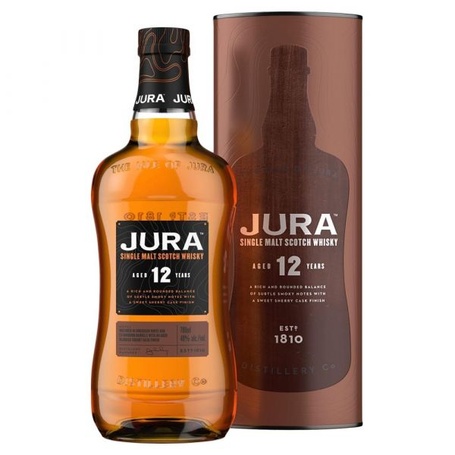
The Jura 12 Year Old is the clearest expression of the distillery's lighter style: tropical fruit, vanilla, a gentle coastal note that speaks to the island setting without the drama of the more heavily peated expressions. At £40 it is the right starting point for Jura and a useful contrast to Talisker for those exploring what island malts can mean across a stylistic range.
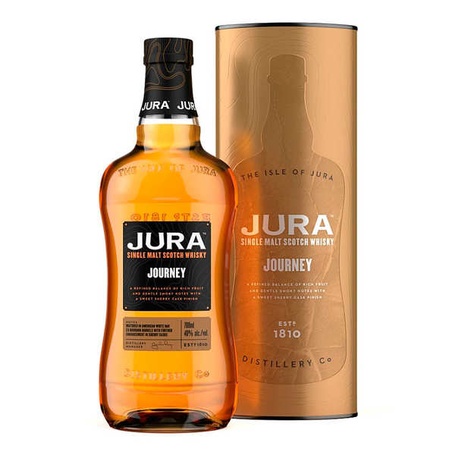
Jura Journey is the distillery's entry-level no-age-statement expression — lighter, more immediately approachable, and accessible at £30. The profile is clean and fruity with a mild sweetness. A practical starting point for anyone approaching island malts for the first time who wants something less demanding than Talisker's pepper finish or Ledaig's smoke.
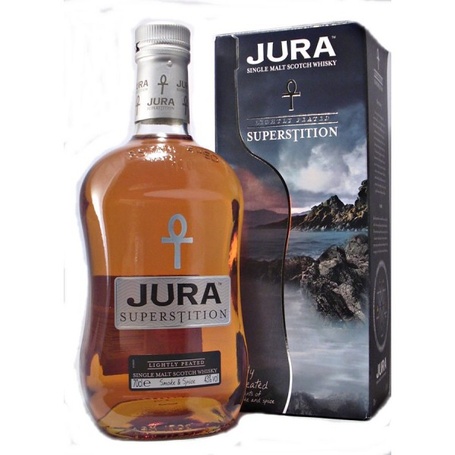
Superstition is Jura's peated expression — a no-age-statement whisky that blends young heavily peated malt with older unpeated spirit to produce a Jura with more smoke than the standard expressions while retaining the house's characteristic lightness. At £42 it sits alongside Talisker 10yr in the mid-premium tier and offers a distinctively different interpretation of island peat: softer, more integrated, less aggressive.
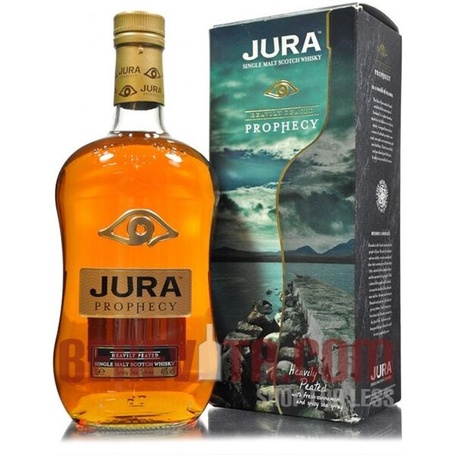
Jura Prophecy is the most heavily peated expression in the range — 40ppm phenols, the highest in the Jura portfolio — producing a whisky that steps fully into the smoky island style. Peat smoke, dark fruit, a warmth from the higher phenol content: a different animal from the Journey or the standard 12yr. At £50 it makes the case for Jura's range — that a single distillery can credibly span from the lightest island style to genuinely intense peat.
The five islands above produce six distilleries' worth of whisky — Mull alone accounts for two entirely different styles from the same address. What connects them is not a shared flavour profile but a shared relationship with geography: with exposure to Atlantic weather, with isolation from the mainland's commercial pressures, and with the kind of specificity that comes from making whisky in a place where the place is impossible to ignore.
The Speyside guide from two weeks ago covered the density and tradition of Scotland's most productive valley. This guide covers the opposite: the edges, the outliers, the distilleries where the choice to make whisky at all was never the obvious one. That context shapes what's in the bottle. It is worth tasting.