Departments
 Departments
Departments
Departments

New to Slowsip? Create Account
There's a moment, somewhere between the first nose and the second sip of a Hibiki Harmony, where you stop asking questions and just drink. No one's told you to feel impressed. You just are.
That's the trick Japanese whisky has pulled off — quietly, consistently, for the better part of twenty years. While the rest of the spirits world was busy shouting, Japan was refining. And then the world caught up and started paying attention.
The question worth asking now, in 2026, isn't why Japanese whisky became so coveted. The reasons are obvious enough: the craftsmanship, the restraint, the precision distilling philosophy that treats consistency as an art form in its own right. The better question is where it goes from here — and what you should actually be drinking.
The rise wasn't overnight, even if it felt like it. The foundations were laid in 1923 when Shinjiro Torii broke ground on the Yamazaki distillery outside Kyoto. His vision was to make whisky suited to Japanese taste — something lighter, more aromatic, less punishingly peated than the Scotch that had inspired him.
What changed the story globally came much later. A string of international competition wins in the early 2000s forced the world to confront the obvious: Japanese producers had been making world-class whisky for decades, and most of the West simply hadn't noticed.
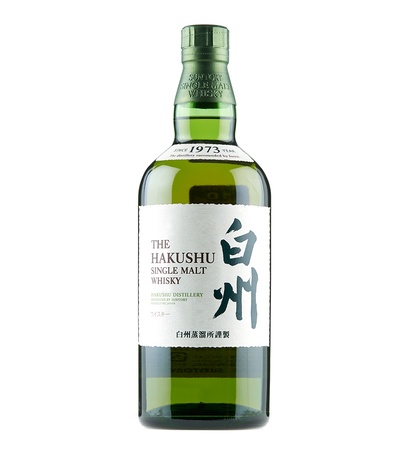
Then came scarcity. As demand surged through the 2010s, the major houses — Suntory and Nikka between them covering the lion's share of the market — quietly ran out of mature stock. Age statement expressions began disappearing. The Hibiki 12. The Hakushu 12. Beloved bottles that had been attainable became either absent or eye-wateringly priced. The scarcity itself became part of the mythology. Supply had only diminished as demand grew, with producers openly acknowledging they simply hadn't made enough whisky a decade prior to meet the surge they hadn't anticipated.
What's interesting is what came next. Rather than waiting for the market to cool, the major houses doubled down on no-age-statement expressions. And they made them good enough that the argument for age statements began to matter less.
There's still a contingent of drinkers who treat NAS bottles with suspicion, as if the absence of a number on the label signals something withheld. It's a reasonable instinct that doesn't hold up especially well when you're drinking the Hibiki Harmony.
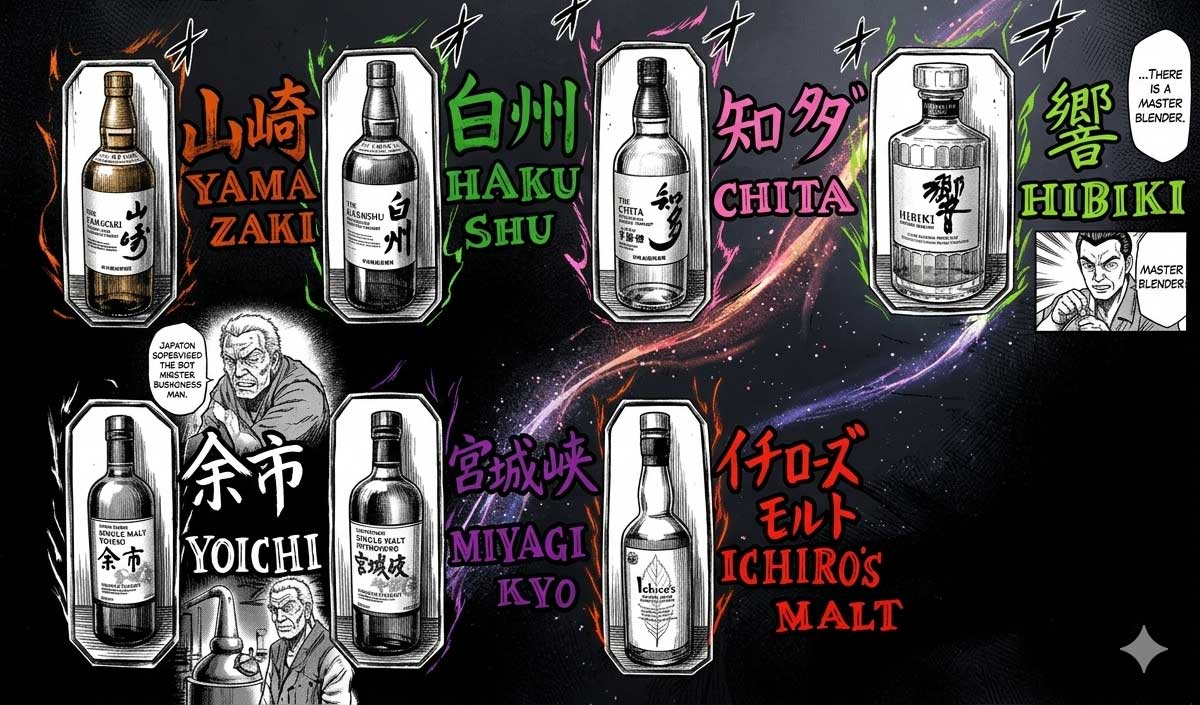
Harmony draws from malt whiskies at Yamazaki and Hakushu, along with grain from the versatile Chita distillery — blended across five different cask types including Mizunara and ex-sherry — all under the watchful hand of the master blending team. The result isn't a compromise version of something better. It's a whisky built specifically for what it is: balanced, floral, and consistently excellent. Honey, candied orange, and white chocolate on the palate, with a touch of Mizunara spice lifting the finish — at around £75 from The Whisky Exchange, it remains one of the most compelling bottles at its price point.
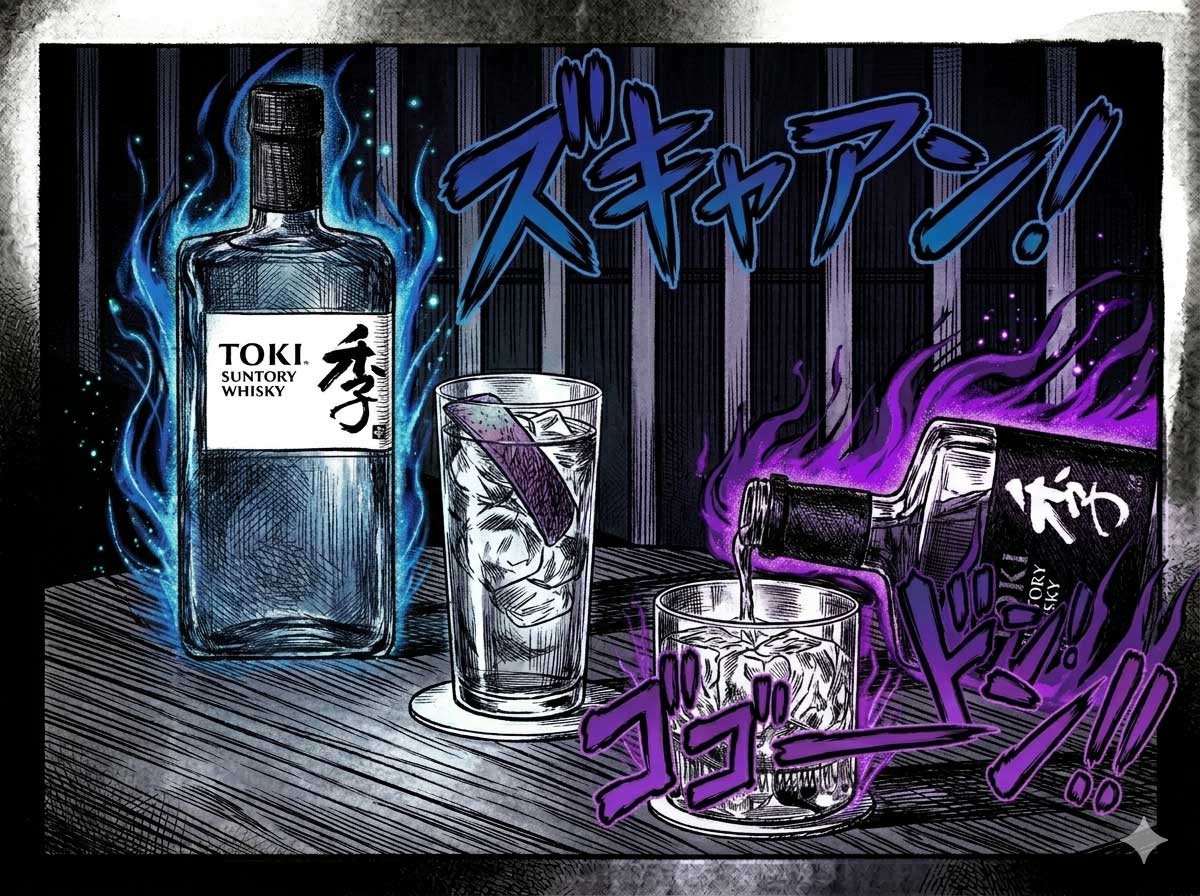
The same argument applies to Suntory Toki, which was never trying to be Harmony's cheaper sibling so much as a different proposition entirely. Built around Hakushu malt and Chita grain, it's light and clean — green apple, grapefruit, peppermint — and designed to shine in a highball with soda and a lemon twist. At under £30, it's one of the most enjoyable entry points in whisky, full stop. Not a consolation prize. An intention.
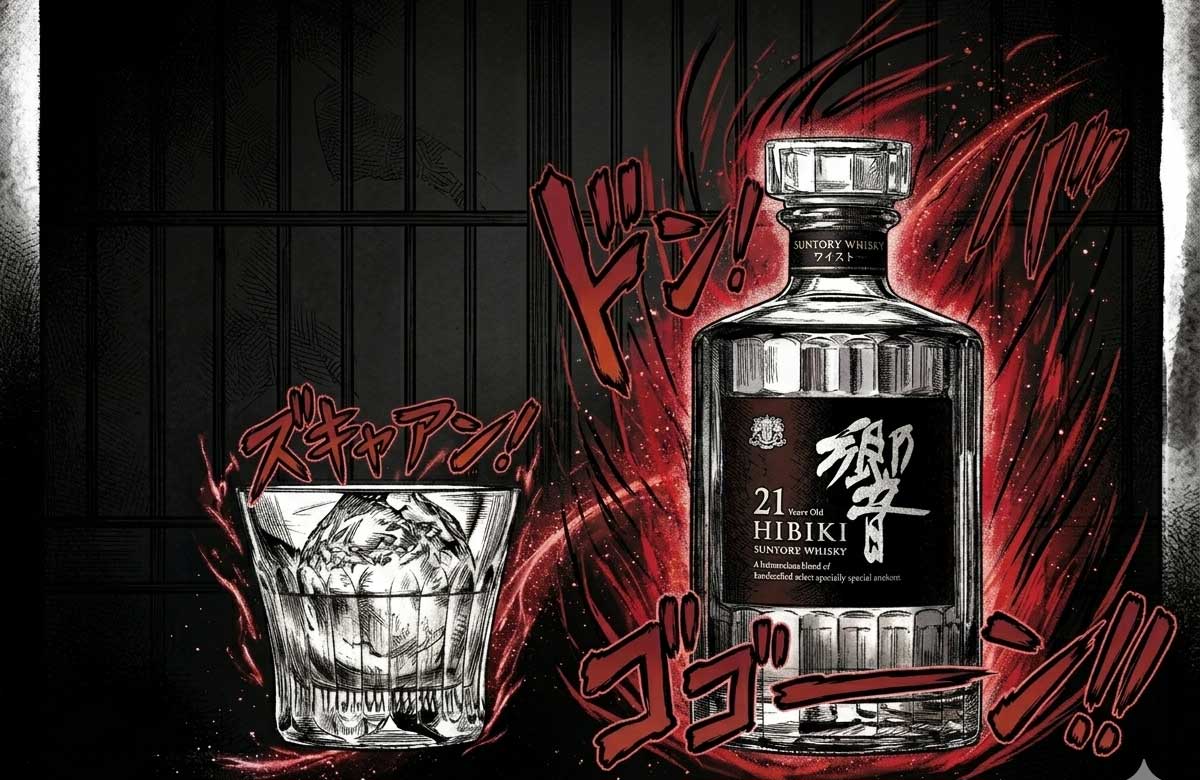
Suntory gets most of the cultural oxygen when people talk about Japanese whisky. Hibiki's bottle — 24 facets representing the seasons of the Japanese lunar calendar — has become an icon. But Nikka has quietly been doing something formally stranger and arguably more interesting.
Nikka's Coffey stills — a type of continuous still invented by Aeneas Coffey in 1830 — were imported from Scotland to Japan in 1963. These traditional stills are inefficient by modern standards, but they retain more flavour from the raw ingredients and deliver a distinctive creamy texture that modern column stills simply don't produce.
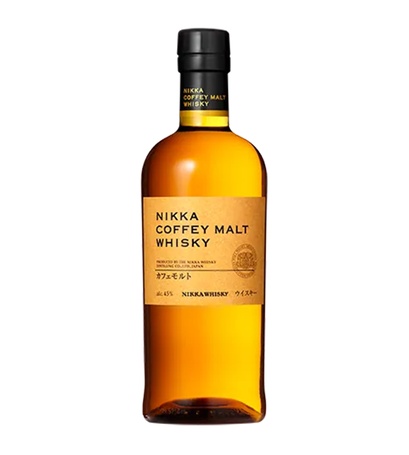
The Nikka Coffey Malt takes malted barley — a pot still ingredient, in every other whisky tradition on earth — and runs it through this continuous still instead. The result is technically classified as grain whisky. It tastes like nothing else: candied lemon and orange peel, cinnamon, clove, and oak, with a rich and fruity character that defies easy categorisation. At around £58, it's a bottle that rewards curiosity over convention.
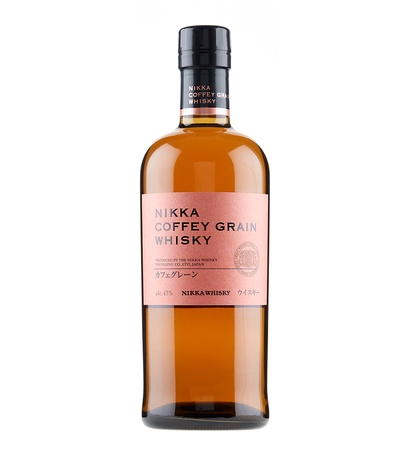
The Nikka Coffey Grain is its more immediately accessible companion — predominantly corn, distilled in the same stills, delivering heady tropical fruit, mango and papaya aromas, with toffee and coconut on the palate and a finish of rich oak and marmalade. If you've spent your whisky life in Scotland or Kentucky, this will be disorienting in the best sense.
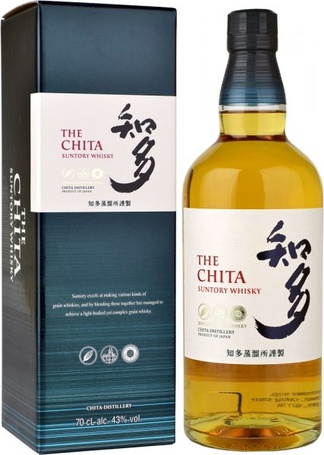
Chita tends to get overlooked in conversations about Japanese whisky, largely because its output exists primarily to prop up the blends. The Chita Distiller's Reserve — its standalone expression — is worth your attention. Honey, vanilla, and soft spice. The grain whisky backbone of everything Suntory does, given room to exist on its own terms. At around £50, it fills a useful space between Toki and Hibiki Harmony for anyone wanting to understand how the system works.
The market has stabilised since the frenzy of the mid-2010s, which means attainable Japanese whisky is once again genuinely attainable. Demand has softened from its peaks, and while the category remains robust, the chaos of the secondary market has calmed considerably. You can, right now, walk into a good independent retailer or click through to The Whisky Exchange or Master of Malt and find all six bottles listed below without having to pay collector premiums or wait for an allocation.
That window might not stay open forever. Drink now.