Departments
 Departments
Departments
Departments

New to Slowsip? Create Account

I opened a bottle of Moët on a Wednesday last month because the weather had been good and I had finished something I'd been putting off and the fridge contained a bottle I'd been saving for no stated reason. My partner asked what we were celebrating.
Nothing, I said. That's the point.
She looked at me the way people look at someone who has said something obvious while believing it to be profound. Which is fair. But I think the instinct to reach for a reason — to require a justification before opening good fizz — is one of the more pervasive forms of self-denial in British drinking culture. We are, as a nation, quite comfortable drinking mediocre wine on a Monday with no ceremony whatsoever. The idea of opening something genuinely good without a birthday attached to it still gives people pause.
This is backwards. The occasions will happen regardless. The Tuesday, the Wednesday, the random good afternoon — these are finite. They deserve the good stuff at least as much as the events do.
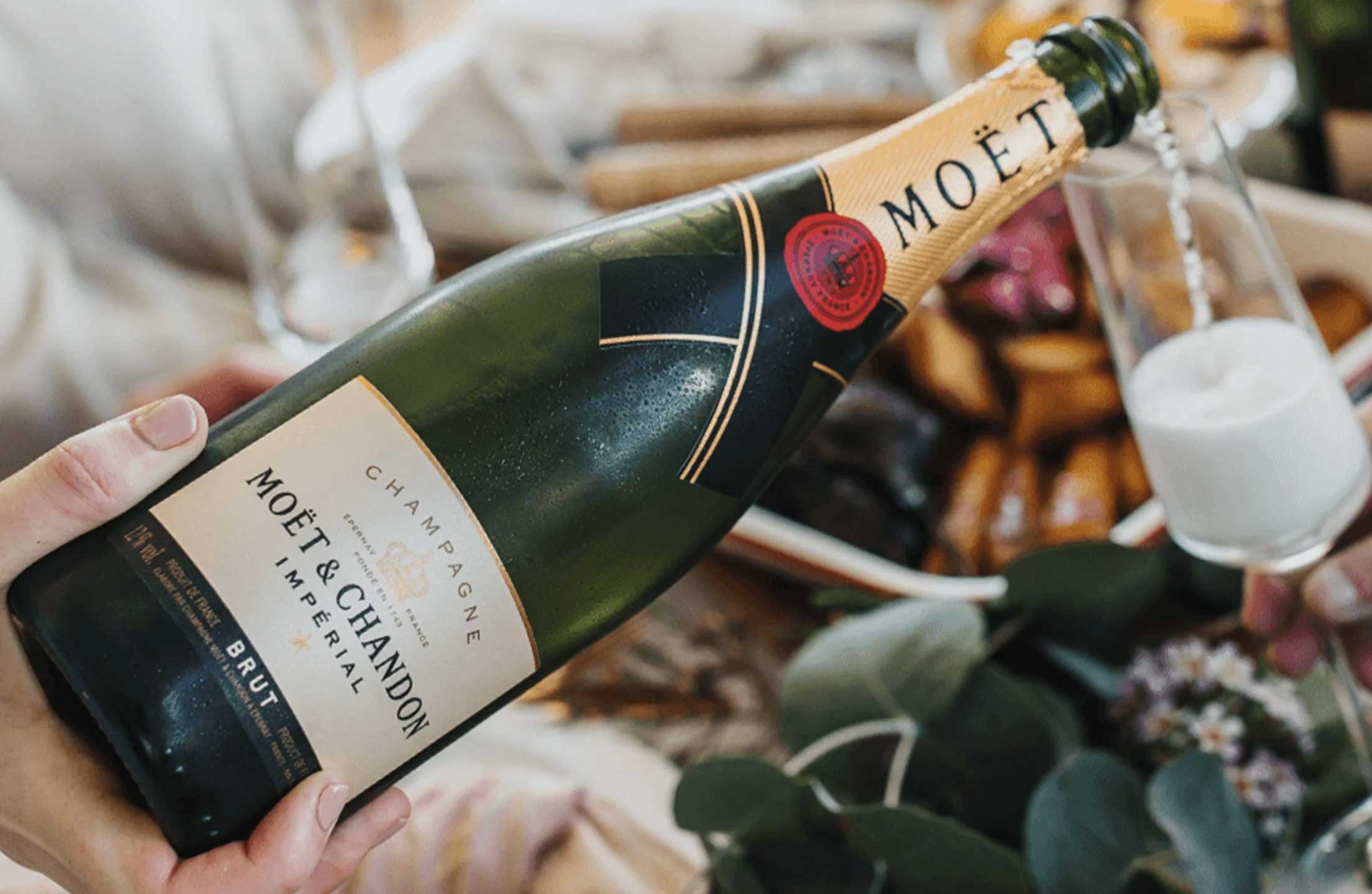
Champagne became ceremonial somewhere in the nineteenth century, when the great houses figured out that association with coronations, race wins, and ship launches was better marketing than any advertisement. It worked extraordinarily well. The association between Champagne and occasion is now so deeply embedded that opening a bottle without one feels faintly transgressive.
Which is, if you think about it, exactly the right reason to do it.
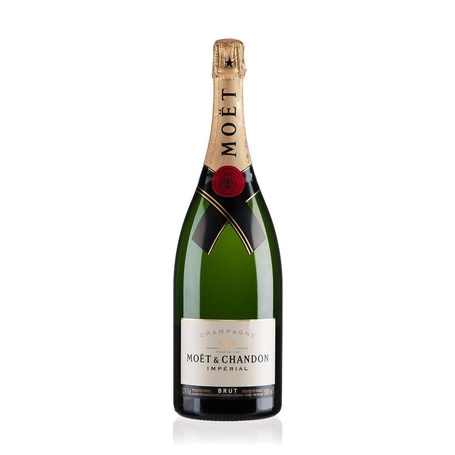
Moët Brut Imperial is the Champagne that most people think of when they think of Champagne — it's been at the centre of the house's range for over a century, and its ubiquity has perhaps made it easy to take for granted. Don't. This is a carefully constructed wine: a blend of Pinot Noir, Pinot Meunier, and Chardonnay that delivers the house's signature green apple brightness, a toasty undercurrent, and a finish that invites a second glass before the first one is quite finished. It is not the most complex Champagne available. It is one of the most pleasurable, which is a different and arguably more important quality in a drink you are opening on a Wednesday for no reason.

Not everyone wants to open Champagne on a Tuesday. That's fine too. The broader category of sparkling wine has expanded to the point where there is something well-made and genuinely enjoyable at almost every price point, and the hierarchy — Champagne at the top, everything else beneath it — is less useful than it used to be.
Prosecco has done more than any other category to democratise the habit of drinking fizz without a reason, and the best examples deserve more credit than the worst ones cost them.
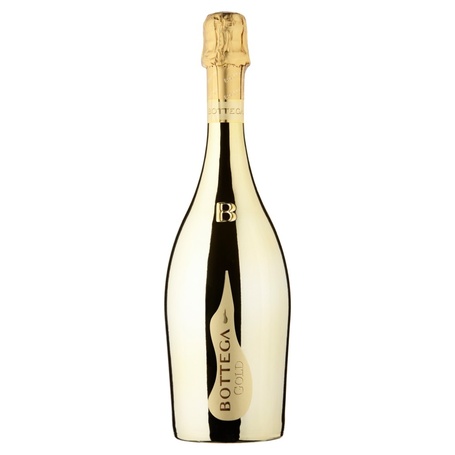
Bottega Gold is the Prosecco that arrives at parties and gets noticed before anyone drinks it. The gold bottle is a deliberate statement — and once you get past the theatre, what's inside is genuinely well-made: clean, apple-fresh, with fine persistent bubbles and a dry finish that avoids the sweetness that undermines cheaper Prosecco. It is a bottle that communicates occasion through appearance while being perfectly comfortable as a Tuesday evening drink. This tension is the point of it, and it lands.
Corvezzo takes a different approach — organic certification, a cleaner production philosophy, and a style that is less about visual impact and more about what's in the glass. The DOC is bright and precise, with a freshness that reflects the Valdobbiadene hills from which it comes. If Bottega Gold is the bottle you open when you want to make a point, Corvezzo is the bottle you open when you want to enjoy yourself without making any point at all. Both are valid positions. Most weeks require both.
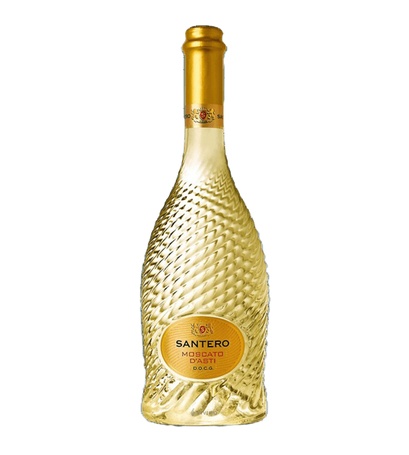
Moscato d'Asti occupies a different register entirely — gently sweet, low in alcohol, softly fizzy rather than properly sparkling. It is the correct choice for an afternoon that doesn't call for structure or seriousness: peach and apricot, a whisper of carbonation, the kind of thing that pairs with sunshine and no particular agenda. Santero's version is reliable and unpretentious. There are worse things to be.
Jacob's Creek isn't a name that appears on many serious wine lists, which is part of why it's worth including here. The 1847 Pinot Grigio is a still white rather than a sparkling, but it earns its place in this conversation because it represents the other end of the occasion spectrum — the wine you open because it's there, it's cold, and Thursday has been long enough. Crisp, clean, and entirely unpretentious. Sometimes the Tuesday drink doesn't need to be remarkable. It just needs to be in a glass.
Open the Bottle
The occasions will keep coming. The promotions, the birthdays, the christenings — none of that is going anywhere, and when it arrives you can open whatever feels right for the moment. But the Tuesday is also a moment. The finished thing, the good weather, the nothing-in-particular that turns into a pleasant evening because someone decided to open something worth drinking — these count too.
The Champagne in your fridge is not waiting for permission. Neither, frankly, are you.